Callnovo
Industries
Products
Services
How We ThinkCompliance
Company

telecommunications

Dropped Calls Shouldn't Mean Dropped Customers

AI agents and human specialists handle service outages, plan changes, and billing questions in 65+ languages — keeping subscribers loyal across every channel.

The short version: put AI on outage status, data balances and plan lookups; put a person on bill disputes, porting, and any callback that crosses a timezone. AI voice is $0.15 a minute, chat $0.15 a session, a shared agent $300 a month for 500 minutes, half-seat minimum. Five days is our normal window to staff your account. And one thing to be blunt about: you are the one industry that can audit our carrier story, because it is your own trade.

Telecommunication towers with antennas and dishes under a bright cloudy sky.

how it plays out

A fibre cut at 6pm, and the same question four hundred times.

Phone Spanish

"My internet has been out since last night"

Service outage during peak hours

  1. AI answers in Spanish, authenticates subscriber via account PIN
  2. Runs remote line diagnostics and detects node outage in customer area
  3. Confirms repair crew dispatched with estimated restoration time
  4. Offers service credit for downtime and sets up SMS alert for restoration
Handled without escalation Credit applied automatically
Web Chat Vietnamese

"I want to switch to the family plan but keep my number"

Plan migration with number portability

  1. AI walks subscriber through available family plan tiers in Vietnamese
  2. Confirms number portability and calculates prorated billing difference
  3. Processes plan change with zero downtime and preserves existing data
  4. Sends confirmation with new plan details and first billing date
Plan switched instantly Zero downtime
SMS English

"Why is my bill $40 higher than usual?"

Unexpected charge on monthly invoice

  1. AI pulls current and previous invoices, compares line items
  2. Identifies international roaming charges from recent travel
  3. Explains charges and offers roaming add-on for future trips
  4. Applies one-time courtesy adjustment and confirms updated balance
Resolved automatically Subscriber retained
WhatsApp French

"I need to set up parental controls on my child's line"

Family account management request

  1. AI verifies account holder identity and sub-line permissions
  2. Walks parent through content filter and screen time settings
  3. Enables usage alerts and spending caps on the child line
  4. Sends summary of all active controls with instructions to modify
Configured remotely Family account secured

the team behind it

The person who can tell an outage from a router.

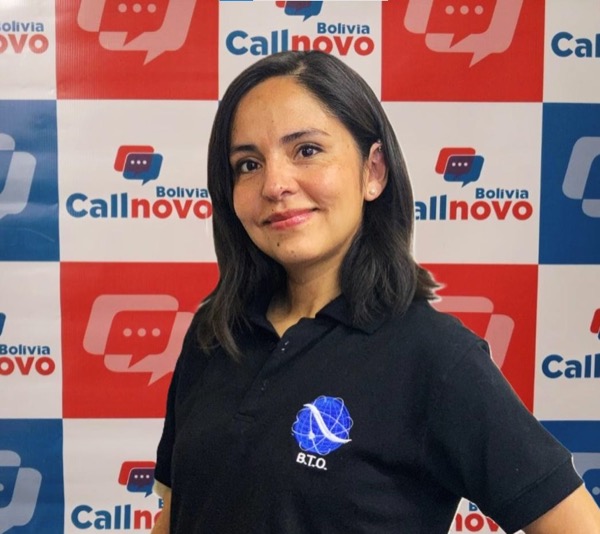
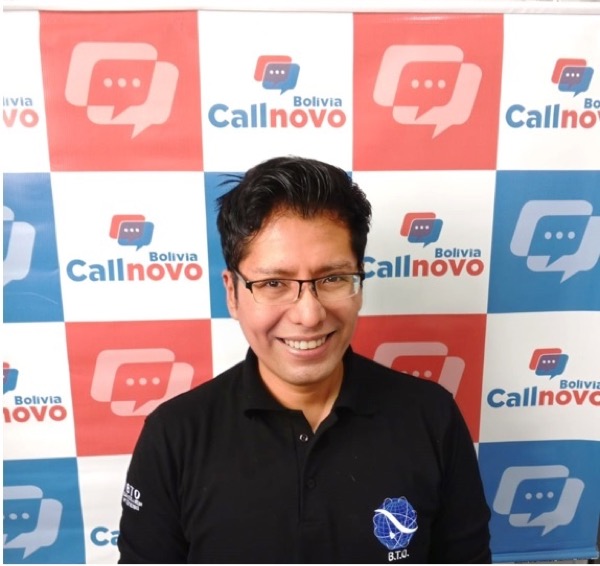
Callnovo agentCallnovo agentCallnovo agentCallnovo agentCallnovo agent real members of the global team

Telecom-Trained Specialists

  • Service provisioning, plan migrations, and number portability across carriers
  • Technical troubleshooting for broadband, mobile, and fiber network issues
  • Billing reconciliation, usage dispute resolution, and retention offers

65+ Languages

  • Native-speaking agents in English, Spanish, Mandarin, and 60+ more
  • Real-time AI translation for rare language pairs
  • Cultural context training for every market we serve

Follow-the-Sun Coverage

  • Operation centres in Canada, Bolivia, Nicaragua, the Philippines and China
  • Smooth handoff between time zones with shared context
  • Holiday and weekend coverage without overtime costs

the part nobody prices in

You are the only buyer on this site who can check whether your vendor is telling the truth about numbers.

Every support vendor selling to a global brand says some version of "we can give you a local number in your markets." Most buyers have no way to test that sentence. You do. You know that provisioning in most jurisdictions requires a local legal entity, proof of a local address, and either a telecom licence or a carrier relationship in that country — because getting those is what your own regulatory team does for a living.

So ask the question you would ask a wholesale partner. Not "do you support Germany" — "who holds the number, and what happens to it if we leave." A vendor reselling a single upstream supplier answers the first and goes quiet on the second. We will not tell you we already hold numbers everywhere.

The second thing that makes telecom different is the shape of the volume. Most industries have peaks you can forecast — a season, a promotion, a launch. Yours has a fibre cut. Four hundred people ask the same question inside an hour, none of them need a person for it, and every one calls back in twenty minutes if the first answer carried no restoration window.

That combination — one correct answer, enormous volume, an hour nobody staffed for — is the clearest case for automation on this site. It is also why the human half matters more here.


who takes which call

Route by the cost of getting it wrong.

Most vendors sell you either an AI receptionist or a live answering service and leave the allocation to you. Since we run both, here is the split we would actually recommend — including the calls we think should never touch automation.

The callRoute toCost of getting it wrong
"Is there an outage in my area?" AI A caller who reports a fault you already know about
"How much data is left on my plan?" AI A support minute spent on a lookup
Add a line, change plan, check upgrade eligibility AI An upgrade that stalls
"Why is my bill $40 higher than last month?" Human A billing dispute that becomes a chargeback
Third call this week about the same line Human A port-out you have already lost
Number porting — in or out Human A customer stranded between two carriers
A callback into a different timezone Human A legal exposure, not just a bad time to call

what it costs

Published rates, so you can do the arithmetic first.

Most vendors in this category quote by form. These are our published packages — not a quote, since language mix, hours and volume all move the number. The per-minute figures are simply the monthly price divided by the included minutes.

OptionPublished pricePer minuteWhat it's for
Live shared team from $650 / month includes 1,500 min → ≈ $0.43/min Overnight and weekend volume, when a truck roll is not happening anyway
AI voice $0.15 per minute Outage status, restoration windows, "is it just me or the whole street"
Web chat $0.15 per session Plan changes, add-a-line, data top-ups and device upgrade eligibility
Live shared team from $300 / month includes 500 min → ≈ $0.60/min Bill explanations — the proration month after any plan change
Dedicated agent from $5.80 per hour, per agent One team that knows your plan matrix, your proration rules and which outages are already open

Anything involving a person is a starting price. Two things move it: which languages you need, and how senior an agent the work actually requires — a bilingual agent handling refund authority is not the same hire as one taking bookings. AI voice and web chat are flat, because there is no hiring in them. And every model above is open to every business on this page: which one fits is a question about the shape of your volume, not about your industry.

Minimum engagement is half a seat — not a five-seat block. We also bill per resolved issue, from $1, where you pay nothing if it is not resolved; that model fits businesses where a customer problem actually gets solved on the call, not businesses where the call is intake.

do the arithmetic yourself

The number that decides this is your port-out rate, not your cost per call.

Pull last quarter's port-outs and count, for each, how many support contacts that line generated in the ninety days before it left. Call that P. If P is above your average, support was not a cost centre on those accounts — it was the last place you could have intervened. Most carriers never run this, because support data and churn data live in different systems and nobody owns the join.

At a typical monthly ARPU, one retained line is worth more over its remaining contract than a year of that line's support contacts cost at $0.15 a minute. So the question is not how cheaply the queue can be answered — it is whether anything in it is being read as a signal. Repeat billing contact on one line, in a short window, is the most legible churn signal in this industry and among the cheapest to detect.

So split it: outage status, balances and plan lookups have one right answer and no retention risk — run them at the lowest rate that answers correctly, and spend what you saved on a human reading the queue for lines where P is climbing.

setup

Five days to put the right person on it.

Five days is our normal window to staff a live account — that is five days to find and place an agent who fits your business, not five days of software setup. AI voice can go live sooner because there is no hiring step.

your existing software

It goes into your system, with a record of who said what.

We work inside the CRM, practice system or case tool you already run, rather than handing you a second inbox to check. Every contact leaves a timestamped record — who called, what was asked, what was said back, what was promised — because in your line of work the question six months later is not "did someone call" but "what exactly did we tell them". Tell us what you run and we will say straight whether we connect to it today.

what comes off the call

What we need before we answer for you.

Most of this already exists in your OSS or knowledge base. Send it up front because a telecom queue punishes vagueness faster than most: an agent who guesses at a proration rule creates a billing dispute.

  • Your plan matrix, including the legacy plans you no longer sell but still bill
  • Proration rules, in full — this is where wrong answers become disputes
  • How we see outage status: a feed, a status page, or a number to call
  • What an agent may and may not do on an account without a supervisor
  • Your porting process, both directions, and who owns a stuck port
  • Upgrade eligibility rules and any device financing terms attached
  • The escalation path for a customer who has already called three times
  • Which markets we answer in, and on whose numbers
  • For outbound: the timezone of record for each contact, not the account address

The last one looks like a detail and is not. An account address and a subscriber's actual location stop matching the moment someone moves and keeps the number.

where AI should not be

The calls we will not put a bot on.

"Why is my bill higher than last month?"

Almost always proration, and almost always correct — which is exactly why it needs a person. The customer is not asking for a calculation, they are asking whether they were treated fairly. An automated breakdown that is arithmetically perfect and tonally wrong turns a question into a dispute, and disputes here reach a regulator more often than in any other vertical on this site.

Anything to do with porting, in either direction

A port sits between two carriers and a customer who cannot be reached on the number in question. It is the one workflow where being stuck is the default rather than the exception, and it needs someone who can hold the case across days and chase the other side. A bot can report status. It cannot own a stuck port.

The third call this week about the same line

The first two may genuinely have been simple. The third is a person deciding whether this is worth the effort, and on a month-to-month plan that decision is a port-out request two weeks later. It needs someone with the authority to do something — a credit, a truck roll, a named callback — not a better explanation.

A callback that crosses a timezone

The constraint here is legal, not editorial: outbound to a residential subscriber is bounded by the hours at the called party's location, not the agent's.

a model we're not selling you

We would not sell you deflection on an outage queue.

During a major outage, automation genuinely answers almost everything — and a vendor quoting deflection rate will show you a spectacular number for that week. It is the easiest number on this page to produce and the least informative. Nobody deserves credit for automating a question with one correct answer.

What the deflection figure hides is the residue. The calls left after the outage queue drains are the expensive ones — the customer whose business ran on that line, the one who has now called three times, the one asking why they are paying for a month they spent offline. A queue measured on deflection will show those as a rounding error in a very good week.

So we quote per-minute and per-session for the volume with one right answer, and a person for the volume that decides whether the line stays. Every model in our price list stays open — per resolution from $1 included, which fits billing work well. What we will not do is put a deflection target in a telecom contract: the week it looks best is the week you lost the most customers.

when we're the wrong choice

Three cases where you should hire someone else.

  • You need the vendor to be your carrier. We answer your customers and can help you get numbers in the markets you sell into. We are not a wholesale voice carrier, hold no spectrum, and do not terminate your traffic. If you are shopping for interconnect or wholesale termination, that is a different kind of company — buy it separately and let us answer the phone on it.
  • Your tier 1 has to touch the network. Some operators cannot separate support from NOC work — the first response means reading a device state or opening a ticket against a node. We staff support specialists, not network engineers. If your first reply needs someone who could log into the OLT, that role belongs in-house — the most we should do is take the volume underneath it.
  • You are pre-paid, month-to-month, and price is the only reason anyone stays. The arithmetic here turns on a contract worth retaining. If customers can leave costlessly this month and only the rate holds them, support quality moves a smaller number than it does elsewhere, and a mostly-automated queue at the lowest rate is the honest recommendation. We would rather say that than sell you a retention story your business model does not support.

questions

What buyers ask before they sign.

How much does it cost?

AI voice is $0.15 per minute and web chat is $0.15 per session. Live agents start at $300 per month including 500 minutes — about $0.60 per minute — or from $5.80 per hour for a dedicated agent working only your account. The minimum engagement is half a seat, not a five-seat block.

How fast can you start answering our phones?

Five days is our normal window to staff a live account — that is five days to find and place an agent who fits your business, not five days of software setup. AI voice can go live sooner because there is no hiring step.

Do you answer in Spanish?

Yes, on the same number, with agents in our Bolivia and Nicaragua operation centres — native Spanish, not machine translation. English and Spanish share one queue, and we cover 60+ more languages if you need them.

Can I mix AI and live agents on one number?

That is the normal setup. You decide which call types go to AI and which reach a person, and you can change the split as your volume changes. Nothing about that decision is locked in at signup.

We do outbound — win-back, collections, appointment confirmations. What constrains when an outsourced team can dial?

The customer's clock, not your team's. Under 47 CFR 64.1200(c)(1) no telephone solicitation may reach a residential subscriber before 8 a.m. or after 9 p.m. local time at the called party's location — the called party's, explicitly. For a regional retailer that is one window. For a carrier with subscribers across four timezones it is four, and one agent can be compliant for part of a list and not the rest at the same moment. Ask any outbound vendor how the dialer enforces that per record, not per shift. If the answer is a start time, they are enforcing their own clock.

Can you take calls on numbers in the countries we sell into?

We can usually help you get one. We work through a network of dozens of carrier relationships rather than reselling a single supplier, and we can apply for numbers on your behalf across Europe, North America, the Middle East, Southeast Asia, Latin America, Japan and Korea. What we will not tell you is that we already hold numbers everywhere — provisioning depends on the jurisdiction, and some want a local legal entity and proof of address first. Name the country and we will tell you what it actually takes there.

Our support volume is mostly outage-driven and spiky. Does that break the pricing?

It is the case per-minute and per-session pricing handles best, because you are not paying for the quiet weeks. What it does not handle is the staffing side of a major event — a fibre cut that triples volume for six hours needs people who already know your escalation path. Plan the shared-team layer for the baseline and agree the surge path before you need it, not during.

start

Upgrade Your Telecom Support Experience

See how AI resolves subscriber issues faster than traditional call centers.