Callnovo
Industries
Products
Services
How We ThinkCompliance
Company

retail

In-store questions don't stop when the doors close

AI agents and trained specialists handle store hours, inventory checks, loyalty programs, and post-purchase support across every channel your customers use.

The short version: put AI on store hours, stock checks and loyalty balances; put a person on returns that cross channels, complaints about a named associate, and any order that is going to be late. AI voice is $0.15 a minute, chat $0.15 a session, a shared human agent $300 a month for 500 minutes, half-seat minimum. Five days is our normal window to staff your account. And one limit up front: we can only be as accurate as your stock system.

A customer making a payment with a credit card at a store checkout counter using a card reader.

how it plays out

A Saturday afternoon, one item, three stores.

Phone English

"Is this in stock at my local store?"

Customer calling before driving 30 minutes

  1. AI checked real-time inventory at the requested location
  2. Item showing 3 units available in-store
  3. Offered to place a hold for pickup within 24 hours
  4. Customer confirmed — hold placed and SMS confirmation sent
Hold placed in under 60 seconds drove foot traffic to store
Live Chat French

"I bought this in-store but need to exchange online"

Cross-channel exchange request

  1. Verified purchase via receipt number and store location
  2. Confirmed exchange eligibility for different size
  3. Created online exchange order linked to original transaction
  4. Shipped replacement with prepaid return label for original
Exchange processed smoothly cross-channel resolved
SMS English

"How do I use my loyalty points?"

Customer has accumulated points but never redeemed

  1. Pulled loyalty account — confirmed point balance
  2. Explained redemption options: in-store discount or online credit
  3. Walked customer through applying points at checkout
  4. Customer redeemed points on next purchase within the hour
Points redeemed same session loyalty engagement increased
Email Mandarin

"Your store associate was unhelpful"

Complaint about in-store experience at flagship location

  1. AI acknowledged the complaint and apologized
  2. Escalated to store manager with full context and timeline
  3. Offered a goodwill gesture while investigation proceeds
  4. Follow-up scheduled within 48 hours with resolution
Escalated with full context complaint handled professionally

the team behind it

The person who decides whether to send someone across town.

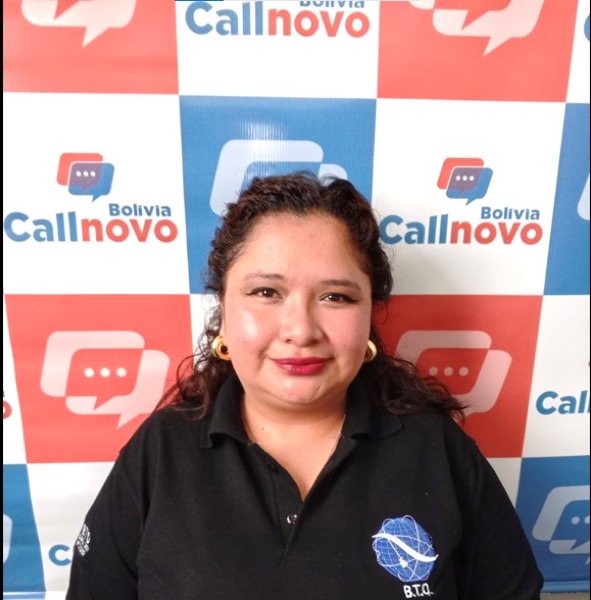
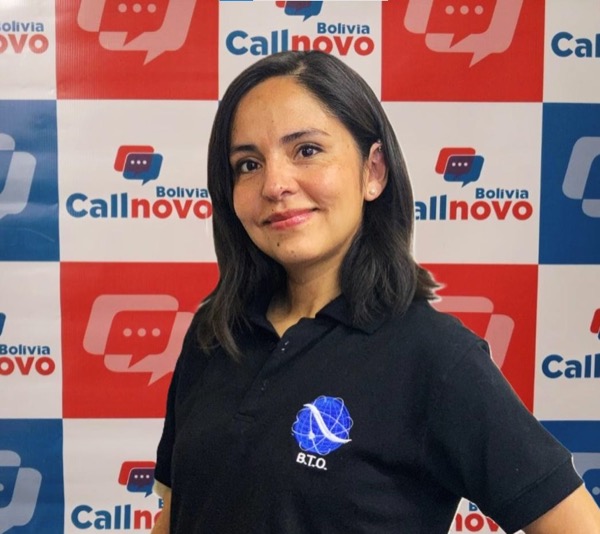
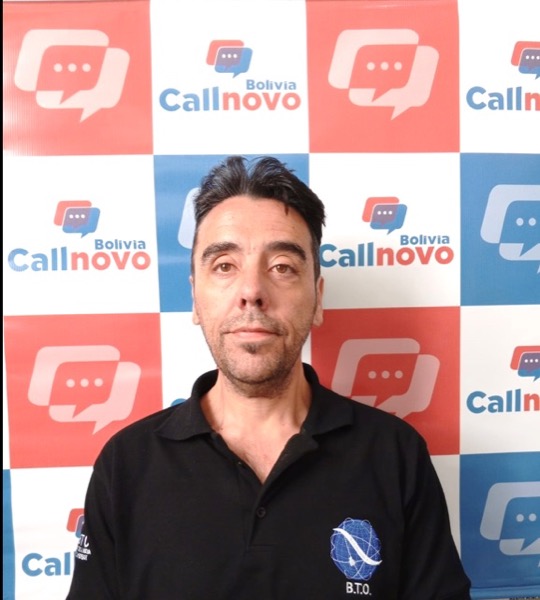
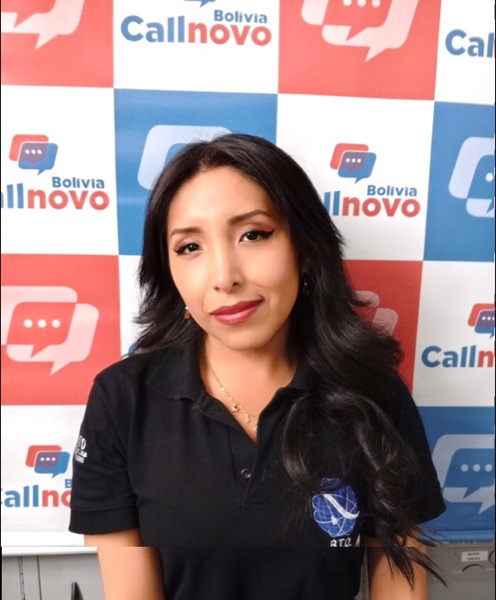
Callnovo agentCallnovo agentCallnovo agentCallnovo agentCallnovo agent real members of the global team

Retail-Trained Specialists

  • Agents experienced with POS systems, inventory management, and omnichannel returns
  • Skilled at de-escalating in-store complaints and managing loyalty programs
  • Trained on seasonal promotions, store policies, and clienteling workflows

65+ Languages

  • Native-speaking agents in English, Spanish, Mandarin, and 60+ more
  • Real-time AI translation for rare language pairs
  • Cultural context training for every market we serve

Follow-the-Sun Coverage

  • Operation centres in Canada, Bolivia, Nicaragua, the Philippines and China
  • Smooth handoff between time zones with shared context
  • Holiday and weekend coverage without overtime costs

the part nobody prices in

A stock question is not a support ticket. It is somebody buying something today.

Every other industry on this site treats an inbound contact as a cost. Retail is the one where it is often the opposite. When a person rings to ask whether you have an item, they have already decided to buy it — the only open question is from whom. They are holding a phone, they are within driving distance, and the answer has a shelf life measured in hours.

This is why deflection metrics do so much damage here. A bot that closes 60% of contacts in a retail queue has not saved you 60% of the cost; it has, some meaningful share of the time, ended a conversation that was about to become a basket. The cheapest support queue is the one nobody calls, and in retail that is also the emptiest store.

The second thing that makes retail different is that a wrong answer has a physical cost, paid by the customer. Tell someone the shelf has it when it does not, and they spend twenty minutes of their Saturday finding out you were wrong. They do not file a ticket about it. They stop believing your stock page, which is the thing that was bringing them in.

So the honest version of what we sell is narrower than most vendors would print. We can answer at the hours your store cannot, in the languages your neighbourhood speaks, and be careful about the difference between "the system shows two" and "we have it." What we cannot do is make your counts true. If they are wrong, we make the wrongness arrive faster.


who takes which call

Route by the cost of getting it wrong.

Most vendors sell you either an AI receptionist or a live answering service and leave the allocation to you. Since we run both, here is the split we would actually recommend — including the calls we think should never touch automation.

The callRoute toCost of getting it wrong
"What time do you close on Sunday?" AI A caller who drives to a closed store
"Do you have this in a 10 at the Denver store?" AI A sale that walks to whoever answers
Loyalty balance, gift card balance, receipt resend AI A member who stops using the card
"I bought it in-store and want to return it online" Human A refund argued in public afterwards
"Your associate was rude to me" Human A review naming a person by name
A ship-from-store order that is going to be late Human A legal obligation missed, not just a delay
Caller says the item was in stock online but not on the shelf Human A wasted trip you will pay for twice

what it costs

Published rates, so you can do the arithmetic first.

Most vendors in this category quote by form. These are our published packages — not a quote, since language mix, hours and volume all move the number. The per-minute figures are simply the monthly price divided by the included minutes.

OptionPublished pricePer minuteWhat it's for
Live shared team from $650 / month includes 1,500 min → ≈ $0.43/min The week after a promotion, when volume triples and your floor staff cannot pick up
AI voice $0.15 per minute Store hours, holiday hours, "is this in stock at my local store"
Web chat $0.15 per session Calls that arrive after the doors close, when the store phone rings out
Live shared team from $300 / month includes 500 min → ≈ $0.60/min Loyalty points, gift cards and receipt lookups
Dedicated agent from $5.80 per hour, per agent One team that knows your return window, your price-match rule and which stores carry what

Anything involving a person is a starting price. Two things move it: which languages you need, and how senior an agent the work actually requires — a bilingual agent handling refund authority is not the same hire as one taking bookings. AI voice and web chat are flat, because there is no hiring in them. And every model above is open to every business on this page: which one fits is a question about the shape of your volume, not about your industry.

Minimum engagement is half a seat — not a five-seat block. We also bill per resolved issue, from $1, where you pay nothing if it is not resolved; that model fits businesses where a customer problem actually gets solved on the call, not businesses where the call is intake.

do the arithmetic yourself

Count the calls that end in a visit. That is the whole calculation.

Pull a week of inbound calls and sort them into two piles: people asking whether to come in, and everything else. Call the first pile V. Those are not support contacts — they are footfall you have already earned, and you are deciding whether to pay $0.15 to collect it. Multiply V by your average basket and compare it to what the whole queue costs. For most retailers it is not close.

This is the reverse of the calculation an ecommerce brand runs. There the goal is fewer contacts per order, because a contact means something went wrong with an order that already exists. In a store the contact often comes before the order exists, and suppressing it suppresses the order. A vendor pitching deflection rate is quoting an ecommerce metric at a business that is not ecommerce.

The pile that is pure cost — returns, complaints, receipt hunting, "where is my ship-from-store order" — is real, and worth handling cheaply where it can be. But it is a different pile with a different target, and the common mistake is one blended cost-per-contact number covering both. One pile you want smaller. The other you want answered.

setup

Five days to put the right person on it.

Five days is our normal window to staff a live account — that is five days to find and place an agent who fits your business, not five days of software setup. AI voice can go live sooner because there is no hiring step.

your existing software

We work inside your storefront, not beside it.

Amazon through the SP-API, two-way with Shopify, plus eBay — so an agent handling a case can see the order, the shipment and the return without asking the customer to repeat the number. WhatsApp, LINE and TikTok come into the same queue as email and chat. If a platform is missing from that list, ask before you assume: we will tell you straight whether we connect today or whether it needs building.

your existing software

It lands in the software you already run.

  • Amazon
  • Shopify
  • eBay
  • WhatsApp
  • LINE
  • TikTok

Running something else? Tell us what it is and we will say straight whether we connect to it today or whether it needs building.

what comes off the call

What we need before we pick up for you.

Most of this is one afternoon of somebody in operations exporting things they already have. It is also the difference between an agent who sounds like your store and one who sounds like a call centre.

  • Store list with hours, holiday hours and which locations differ from the pattern
  • How we read stock — the feed, the screen, or a phone number for the floor
  • Your return window, and every exception to it that staff actually apply
  • Price-match and price-adjustment rules, including how far back
  • What happens when an in-store purchase comes back through an online channel
  • Loyalty tiers, what each one unlocks, and who can override
  • Which SKUs are online-only and which are store-only
  • The escalation path to a district or regional manager, with hours
  • Who receives a complaint that names an employee, and how fast

The stock line is the one that decides how useful we can be. An agent reading a feed that updates nightly is a different service from one who can ring the floor.

where AI should not be

The calls we will not put a bot on.

"Your associate was rude to me."

This is about a person who works for you, whose name the caller may be about to put in a review. It needs someone who can listen without defending, take it down accurately, and get it to the right manager — and it needs to not sound like a form.

An in-store purchase coming back through an online channel.

Two systems, two receipts, often two different return windows, and a customer who reasonably thinks it is one company. Automation resolves this by picking whichever rule is written down, which is how a refund becomes an argument in public.

A ship-from-store order that will be late.

The obligation here is to reach out and offer a cancellation before the customer asks, and getting that wrong is not a service failure — it is a rule breach. A person should own the call and the wording.

"It said in stock online and the shelf was empty."

The caller has already made a trip for nothing. Anything that reads as a scripted apology confirms exactly what they suspect. This one is repaired by a human doing something concrete — locating it elsewhere, holding it, sending it — or not repaired at all.

a model we're not selling you

We would not sell a retailer deflection.

Deflection rate is the headline number in most support proposals: what share of contacts we close without a person. It is a genuinely useful number in ecommerce and in software, where a contact is a symptom of something already sold and already wrong. Sold to a retailer, it is the wrong metric pointed at the wrong pile.

The problem is that deflection is measured without regard to what the contact was worth. A stock check a bot answers well and one a bot ends badly both count as deflected. The number rises the same way whether we are serving your customers or losing them — and a vendor paid against it has no reason to look closer.

Which is why on this page we quote per-minute and per-session for the volume that is genuinely routine, and put a shared or dedicated person on the pile where the money actually is. Every model in our price list stays open — including per resolution, from $1, which fits the returns-and-receipts side of a retail queue rather well. What we will not do is put a deflection target in a retail contract and call it a service level.

when we're the wrong choice

Three cases where you should hire someone else.

  • Your stock data is not reliable and you know it. This is the honest first question, not the third. If your counts are frequently wrong, faster answers produce faster wasted trips, and you will have paid us to accelerate a problem that lives in your inventory system. Fix the feed, then call us — we would rather say that now than explain it at the first review.
  • You have one store and the person who answers the phone is standing in it. Somebody who can look up while they talk beats any remote team on stock questions — they are looking at the shelf, not at a record of the shelf. Outsourcing earns its keep when there are enough locations that nobody holds them all in their head, or enough hours that nobody is standing there.
  • What you actually want is outbound selling with a quota. We will take an order, hold an item and tell a caller what else you carry. We do not run a commissioned floor and we do not push scripts written to lift basket size. If the brief is revenue per call, the right vendor is a telesales shop, and they will beat us at it.

questions

What buyers ask before they sign.

How much does it cost?

AI voice is $0.15 per minute and web chat is $0.15 per session. Live agents start at $300 per month including 500 minutes — about $0.60 per minute — or from $5.80 per hour for a dedicated agent working only your account. The minimum engagement is half a seat, not a five-seat block.

How fast can you start answering our phones?

Five days is our normal window to staff a live account — that is five days to find and place an agent who fits your business, not five days of software setup. AI voice can go live sooner because there is no hiring step.

Do you answer in Spanish?

Yes, on the same number, with agents in our Bolivia and Nicaragua operation centres — native Spanish, not machine translation. English and Spanish share one queue, and we cover 60+ more languages if you need them.

Can I mix AI and live agents on one number?

That is the normal setup. You decide which call types go to AI and which reach a person, and you can change the split as your volume changes. Nothing about that decision is locked in at signup.

A ship-from-store order is going to be late. Who is supposed to tell the customer?

You are, and sooner than most retailers realise. Once you take orders by phone or online, the FTC Mail, Internet, or Telephone Order Merchandise Rule (law.cornell.edu/cfr/text/16/435.2) requires that if you cannot ship within the time you advertised — or within thirty days if you advertised none — you offer the buyer the choice of consenting to the delay or cancelling for a prompt refund, and that offer must be made without prior demand. The obligation is to reach out first, not to answer well when they call. That is a support workflow, not a warehouse one — and it is the thing an understaffed store phone never gets to.

Can you tell customers whether something is in stock?

Only as accurately as your system knows. We read the same stock figure your associates read, and we will say "the system shows two, I would call the store to have one held" rather than promise a customer a drive. If your counts are routinely wrong, outsourcing support makes the problem faster, not smaller — we would rather tell you that in the first conversation.

Will you take orders and sell over the phone?

We will take an order, hold an item, and tell someone what else you carry in that size. We are not a commissioned sales floor and we do not run scripts written to upsell. If you want outbound selling with a quota attached, that is a different service and a different kind of person — say so and we will tell you whether we are the right shop.

start

See how AI supports your retail customers after hours

We will show you how AI and specialists keep retail support running around the clock.