Callnovo
Industries
Products
Services
How We ThinkCompliance
Company

saas

Your Users Churn When Support Queues Grow

AI agents and multilingual human specialists resolve onboarding questions, billing disputes, and technical issues in 65+ languages — before frustration becomes cancellation.

The short version: put AI on password resets, plan questions and invoice copies; put a person on anything that might be a defect, a security question, or an account about to leave. AI voice is $0.15 a minute, chat $0.15 a session, a shared human agent $300 a month for 500 minutes, half-seat minimum. Five days is our normal window to staff your account. And settle one thing first: outsourcing support makes us a sub-processor of your customers' data, which is a contract question before it is an operational one.

Team of developers working together on computers in a modern tech office.

how it plays out

A trial that stalls on a Friday afternoon.

Live Chat English

"I can't figure out how to connect my CRM integration"

Onboarding friction during trial period

  1. Customer opens live chat from the integrations settings page
  2. AI detects account is in trial, identifies CRM type from workspace metadata
  3. Walks customer through OAuth connection with step-by-step screenshots
  4. Confirms data sync is active and schedules a follow-up check in 24 hours
Handled without escalation Trial saved
Email German

"Why was I charged twice this month?"

Billing dispute from annual plan holder

  1. AI parses email in German, pulls billing history from Stripe
  2. Identifies duplicate charge caused by plan upgrade mid-cycle
  3. Issues prorated refund automatically and sends itemized breakdown
  4. Confirms corrected invoice in German with PDF attachment
Resolved automatically Refund issued
WhatsApp Portuguese

"Our dashboard has been loading slow all morning"

Performance complaint from paying customer

  1. AI checks system status page and identifies regional latency spike
  2. Confirms the issue is known and engineering is investigating
  3. Provides estimated resolution window and workaround via API endpoint
  4. Sends proactive update once the incident is resolved
Instant resolution Proactive follow-up sent
Phone Japanese

"We need to add 50 seats before our board meeting Friday"

Urgent enterprise seat expansion request

  1. Human agent takes call in native Japanese, pulls up account
  2. Confirms volume pricing tier and applies enterprise discount
  3. Provisions 50 seats immediately with SSO pre-configured
  4. Emails license summary and updated contract to the admin
Seats live in minutes Enterprise deal expanded

the team behind it

The person who decides whether it is a bug or a misunderstanding.

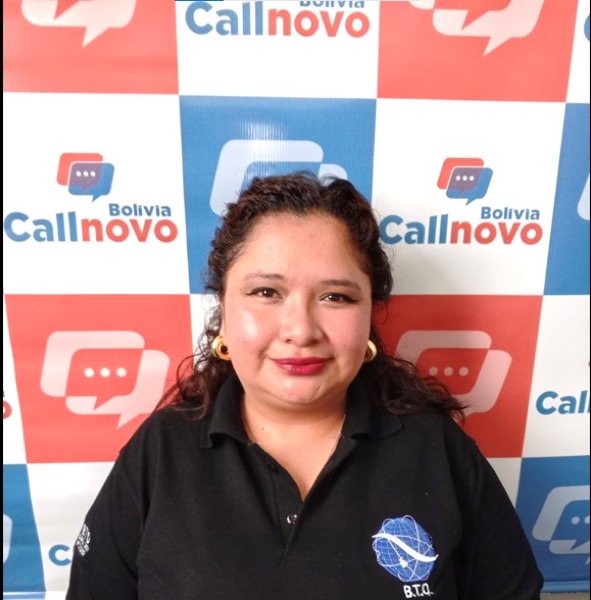
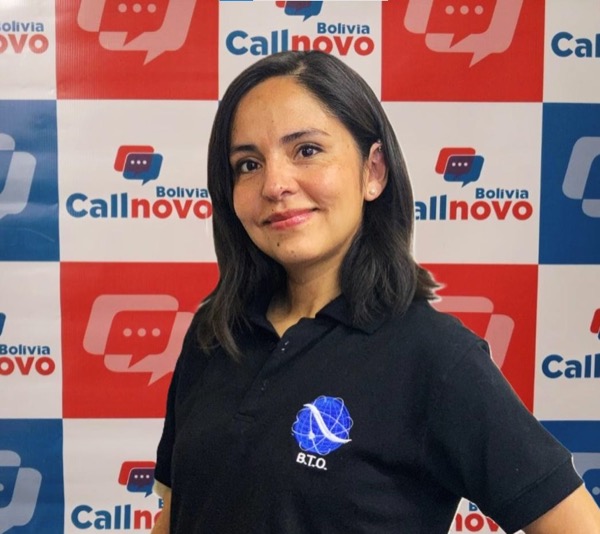
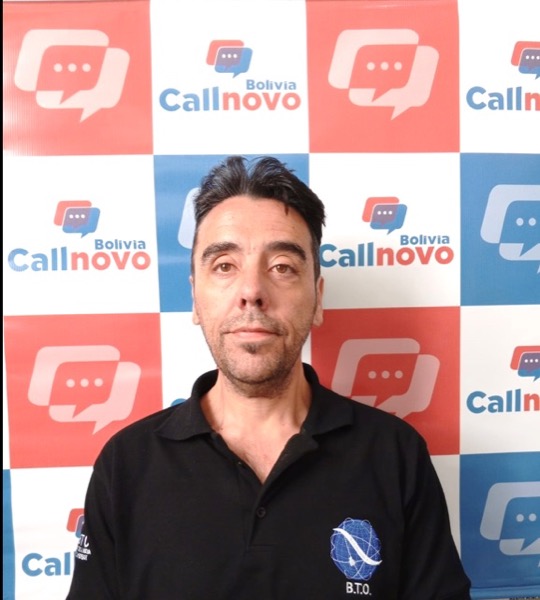
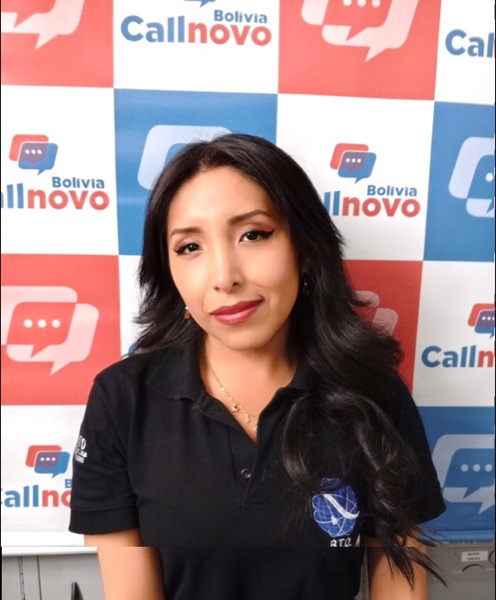
Callnovo agentCallnovo agentCallnovo agentCallnovo agentCallnovo agent real members of the global team

SaaS-Trained Specialists

  • Integration troubleshooting across Stripe, Salesforce, HubSpot, and REST APIs
  • Subscription billing logic including prorations, upgrades, and dunning recovery
  • Onboarding guidance tailored to trial users, SMBs, and enterprise accounts

65+ Languages

  • Native-speaking agents in English, Spanish, Mandarin, and 60+ more
  • Real-time AI translation for rare language pairs
  • Cultural context training for every market we serve

Follow-the-Sun Coverage

  • Operation centres in Canada, Bolivia, Nicaragua, the Philippines and China
  • Smooth handoff between time zones with shared context
  • Holiday and weekend coverage without overtime costs

the part nobody prices in

Your support queue is a leading indicator of churn, and you are reading it too late.

Most SaaS teams measure support the way a call centre does: tickets in, tickets out, time to first reply. Those numbers describe the queue, not the account. A customer who asks the same question three times during a trial is not a support statistic — they are a renewal you have already lost and have not booked yet.

This goes unnoticed for a structural reason: support sits in one tool, product usage in another, the renewal date in a third. The ticket closes, CSAT comes back at four stars, and nobody connects it to the seat count that quietly drops in March.

There is a second failure mode, and it is what makes SaaS different from every other industry on this site. In ecommerce, a customer who stops contacting you has probably received their parcel. In SaaS, a customer who stops contacting you may simply have stopped trying. Silence during onboarding is not satisfaction — it is often what happens just before a seat goes unused for a quarter and someone declines the renewal without ever filing a ticket.

So the question we ask is not "how fast do we close." It is which of these contacts were the same person twice, and which accounts hit something and went quiet instead. Neither shows up in a ticket count; both are cheap to spot once somebody is looking. Looking is a person's job, not a bot's.


who takes which call

Route by the cost of getting it wrong.

Most vendors sell you either an AI receptionist or a live answering service and leave the allocation to you. Since we run both, here is the split we would actually recommend — including the calls we think should never touch automation.

The callRoute toCost of getting it wrong
"How do I reset my password / add a seat?" AI A ticket that should never have existed
"Which plan includes the API?" AI A stalled upgrade
Invoice copy, VAT number, receipt resend AI An annoyed finance contact
"This worked yesterday and does not work now" Human A defect filed as a user error
Where is our data stored / can you sign our DPA Human A confident wrong answer in a procurement file
Third ticket this week from the same account Human A renewal you have already lost and not booked yet
Enterprise trial wiring up SSO before a demo Human The deal, not the ticket

what it costs

Published rates, so you can do the arithmetic first.

Most vendors in this category quote by form. These are our published packages — not a quote, since language mix, hours and volume all move the number. The per-minute figures are simply the monthly price divided by the included minutes.

OptionPublished pricePer minuteWhat it's for
Live shared team from $650 / month includes 1,500 min → ≈ $0.43/min Second-language coverage before that market justifies a hire
AI voice $0.15 per minute Password resets, plan changes, invoice copies, "where do I find X"
Web chat $0.15 per session Trial-period questions at the hour your team is asleep
Live shared team from $300 / month includes 500 min → ≈ $0.60/min Release-day and incident spikes without hiring for the peak
Dedicated agent from $5.80 per hour, per agent One team that has read your docs and knows your plan tiers cold

Anything involving a person is a starting price. Two things move it: which languages you need, and how senior an agent the work actually requires — a bilingual agent handling refund authority is not the same hire as one taking bookings. AI voice and web chat are flat, because there is no hiring in them. And every model above is open to every business on this page: which one fits is a question about the shape of your volume, not about your industry.

Minimum engagement is half a seat — not a five-seat block. We also bill per resolved issue, from $1, where you pay nothing if it is not resolved; that model fits businesses where a customer problem actually gets solved on the call, not businesses where the call is intake.

do the arithmetic yourself

The number that decides this is your ARPA, not the per-minute rate.

Take your average revenue per account per month — call it A. Take the number of support contacts a typical account generates in that same month — call it C. Then each individual contact has roughly A × 12 ÷ C of annual revenue standing behind it. At $300 ARPA and two contacts a month, that is about $1,800 riding on one conversation. Now compare that to $0.15 a minute.

This arithmetic is specific to subscription businesses and does not transfer. A retailer comparing vendors weighs the cost of a contact against the margin on one order. You weigh it against a contract that renews — so the same conversation is worth an order of magnitude more to you, and you should be willing to spend more on it.

So split it: run the volume that carries no renewal risk at the cheapest rate that answers it correctly, and spend the savings on a human reading the queue for the accounts where A × 12 is a number you would hate to lose. One caveat — if your ARPA is low and your volume high, the arithmetic weakens and a mostly-automated queue is the right answer. We will say so.

setup

Five days to put the right person on it.

Five days is our normal window to staff a live account — that is five days to find and place an agent who fits your business, not five days of software setup. AI voice can go live sooner because there is no hiring step.

your existing software

It goes into your system, with a record of who said what.

We work inside the CRM, practice system or case tool you already run, rather than handing you a second inbox to check. Every contact leaves a timestamped record — who called, what was asked, what was said back, what was promised — because in your line of work the question six months later is not "did someone call" but "what exactly did we tell them". Tell us what you run and we will say straight whether we connect to it today.

what comes off the call

What we need before we answer a single ticket.

None of this is a discovery call. It is what a support specialist has to read before they are any use to your customers, and we would rather ask up front than guess in production.

  • Your docs and changelog — including the pages you know are out of date, flagged as such
  • Your known-issues list, the internal one, not the status page
  • Plan tiers and exactly what is gated behind each — this is where wrong answers cost you upgrades
  • The three questions your team is most tired of answering
  • What a defect looks like to you, and who receives it once we have identified one
  • Your escalation path with names and hours, not a shared inbox
  • Whether we are answering in your product's voice or our own
  • Which data we may see, which we may not, and where your DPA sits on sub-processors
  • Seat count and renewal date per account — so triage can see what is actually at stake

The last one is what teams push back on, and it changes the work most. Without it, every ticket looks the same size.

where AI should not be

The calls we will not put a bot on.

"It worked yesterday."

That sentence is a defect report until proven otherwise. An automated assistant will offer a workaround — and a workaround that succeeds is how a bug gets closed as user error and reaches your engineers three weeks later through a churned account.

Anything about where data lives, who can see it, or whether you will sign something.

These answers get pasted into a procurement questionnaire and read by someone's legal team. A confident wrong answer here is worse than a slow one, and worse than none.

The third contact this week from the same account.

The first two may genuinely have been simple. The third is not a question any more — it is a person deciding whether this product is worth the effort, and it needs someone who can offer a call.

An enterprise trial with a deadline.

SSO configuration, a security review, a pilot that has to demo on Thursday. What is at stake is the contract, not the ticket, and the right response is often to fetch someone from your team rather than to answer well.

a model we're not selling you

We would not put per-resolution at the top of this page.

We bill per resolved issue from $1, and nothing when it is not. On the ecommerce pages of this site we recommend it first, because "resolved" there is checkable: the refund went through, the order shipped.

In SaaS it usually is not. Consider the most common serious contact you get: the product does not do the thing the customer expected. We can answer that perfectly — confirm the behaviour, explain the limitation, file it, tell them where it sits — and the customer still cannot do what they wanted. Is that resolved? Whatever answer you give, notice that we now have a commercial interest in the definition, and that is exactly the incentive you do not want on your defect pipeline. A vendor paid per resolution has a quiet reason to record ambiguous outcomes as wins — and defects are where the ambiguity lives.

So we lead here with per-minute and per-session for the volume that has a clean answer, and a shared or dedicated human for the volume that does not. Every model in our price list stays open — per-resolution included, if your contacts are mostly billing and access issues, where "resolved" is as checkable as it is in a store. We would rather name which of our own pricing models is a word game in your industry than let you find it at the first quarterly review.

when we're the wrong choice

Three cases where you should hire someone else.

  • Your tier 1 has to read a stack trace. Some developer-tools companies genuinely cannot separate support from engineering: the first response requires understanding the code. We staff support specialists, not engineers. If your first reply needs someone who could open a pull request, that role belongs in-house — the most we should do is take the volume underneath it.
  • You want a support vendor who is also a better SaaS product than your current one. We do sell one — HeroDash is our own platform, not a licence we resell — and bluntly, on the pure software dimension it does not beat a dedicated SaaS vendor: ecosystem, integration count, buying it yourself with a card at midnight. What it does not do is gate features to protect a subscription, because software is not where our revenue comes from. If you are shopping for the best helpdesk software, buy the best helpdesk software; we will work inside yours.
  • Your support volume is under roughly a hundred contacts a month and stable. At that size the useful thing about outsourcing — absorbing a spike without a hiring decision — is doing nothing for you, and coordinating an external team costs something real. One part-time person who also does something else for you beats us on cost and quality until the volume moves.

questions

What buyers ask before they sign.

How much does it cost?

AI voice is $0.15 per minute and web chat is $0.15 per session. Live agents start at $300 per month including 500 minutes — about $0.60 per minute — or from $5.80 per hour for a dedicated agent working only your account. The minimum engagement is half a seat, not a five-seat block.

How fast can you start answering our phones?

Five days is our normal window to staff a live account — that is five days to find and place an agent who fits your business, not five days of software setup. AI voice can go live sooner because there is no hiring step.

Do you answer in Spanish?

Yes, on the same number, with agents in our Bolivia and Nicaragua operation centres — native Spanish, not machine translation. English and Spanish share one queue, and we cover 60+ more languages if you need them.

Can I mix AI and live agents on one number?

That is the normal setup. You decide which call types go to AI and which reach a person, and you can change the split as your volume changes. Nothing about that decision is locked in at signup.

Does outsourcing support affect our own DPA with our customers?

Yes, and it is worth settling before the commercial conversation. Handling your support means we process your customers' personal data on your behalf, which makes us a sub-processor. Under GDPR Article 28(2) (gdpr-info.eu/art-28-gdpr) a processor may not engage another processor without the controller's prior written authorisation, specific or general. So if your DPA lists named sub-processors and promises notice before changes, adding us is a notice event with a clock on it. Most SaaS companies have that clause; most retailers do not. Send us the DPA in the first week, not the last.

How do you support a product your team did not build?

By reading what your engineers already wrote — docs, changelog, known issues, the internal notes nobody made public — and by escalating fast when the answer is not in there. We staff support specialists, not engineers. If tier 1 has to read a stack trace to answer, that work belongs in-house and we take the volume underneath it.

Will outsourcing support increase churn?

It can, if you buy deflection. Closing a ticket the product should have answered is churn with a lower cost per ticket. What we watch instead is repeat contact — same account, same week, same feature. That pattern is cheap to detect, does not show up in product analytics, and is the earliest honest signal that someone tried, failed, and had to ask a human.

start

See How AI Keeps Your SaaS Users Happy

We'll walk you through a live demo using your actual product workflows.