

Privacy note: To protect customer confidentiality, identifying details have been removed.
Key Takeaways
- The studio did not have a traffic problem. It had a customer journey problem. The social media spike simply exposed a booking operation that had been held together by two people and a handwritten appointment book.
- Missed calls were turning into missed revenue. During peak demand, clients who could not reach the front desk did not wait. They booked somewhere else.
- Callnovo rebuilt the front-of-house operation in one week. Four bilingual agents handled intake, booking, rescheduling, confirmations, cancellations, reviews, and VIP profiles.
- Three months later, peak-hour call answer rate rose from 58% to 98%, VIP client share grew from 22% to 40%, and the studio’s Yelp rating climbed to 4.9 stars.
The week the phone would not stop ringing
A short-form video from a local creator sent a sudden wave of attention to a New York City wellness studio.
For the owner, Mr. Wang, this should have been the best week of his business life. The kind of exposure that normally takes years of referrals, local SEO, and advertising arrived overnight, for free.
Instead, it became the week the operation started breaking.
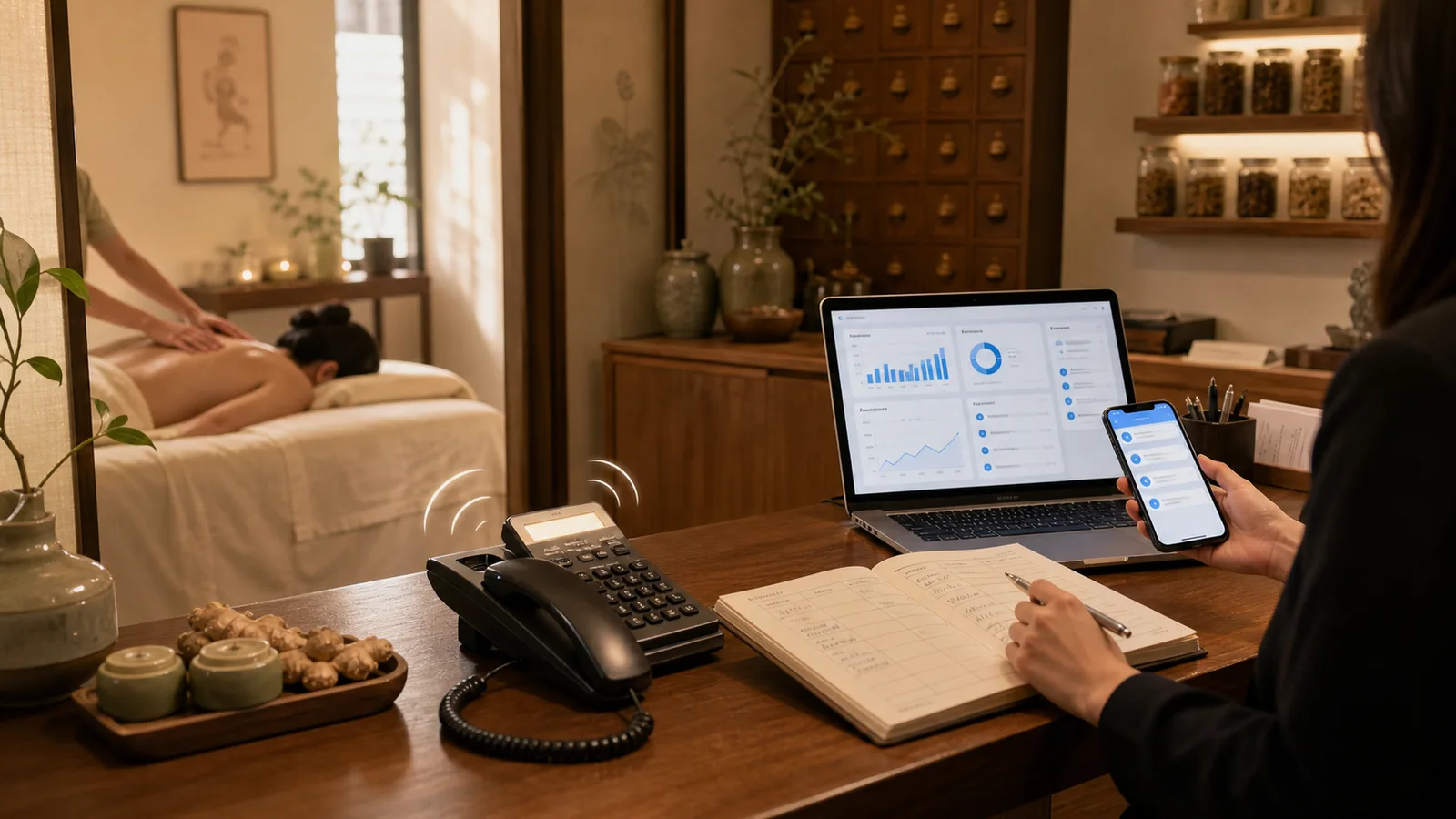
The phone rang continuously. Walk-ins showed up without appointments. Lisa, the front desk receptionist, was fielding 50 to 60 booking and inquiry calls a day while also greeting clients, checking schedules, taking payments, and managing people who had already arrived.
Lunch breaks disappeared. Mr. Wang started leaving treatment rooms mid-session to answer calls himself, apologizing to clients who had come in specifically to relax.
The social media spike did not create a business problem. It revealed one that had always been there. The studio had no system for handling demand at scale, and now demand was at scale.
The real problem was the customer journey
Mr. Wang’s studio did not need more traffic. It needed a more reliable customer journey.
From first inquiry to completed visit, every touchpoint was being held together by two people, a phone, and a handwritten appointment book. Under normal volume, that worked well enough. Under sudden surge volume, it collapsed.
The failure points were not abstract. They were visible every day.
Missed calls became missed revenue. When Lisa was helping a walk-in or already on another call, incoming calls went unanswered. Most callers did not leave a voicemail and try again later. They searched for another studio.
Double bookings and appointment gaps multiplied. Handwritten records could not prevent scheduling conflicts. As volume rose, errors rose with it. Clients arrived to find that an appointment had not been logged correctly, or that their preferred therapist was already with someone else.
Appointments were not confirmed or protected. Clients booked appointments but did not receive a confirmation message, reminder, or cancellation policy. When someone cancelled, the open slot often stayed empty because no one had time to fill it from the waiting list.
High-value client details lived only in one person’s memory. Therapist preferences, pressure preferences, client-approved comfort notes, and special requests were stored in Mr. Wang’s head. When he was in a session, that knowledge was not accessible. When he was distracted by the phones, mistakes happened.
Negative reviews went unanswered. Frustrated clients left Yelp and Google reviews about long waits, unanswered calls, and appointment mix-ups. The team was too busy to respond, so the reviews accumulated without the business explaining what had changed.
Each problem was manageable on its own. Together, during a demand spike, they threatened to turn the best marketing moment the studio had ever received into a lasting reputation problem.
What Callnovo changed in the first week
When Mr. Wang connected with Callnovo, the request was not simply “please answer more calls.”
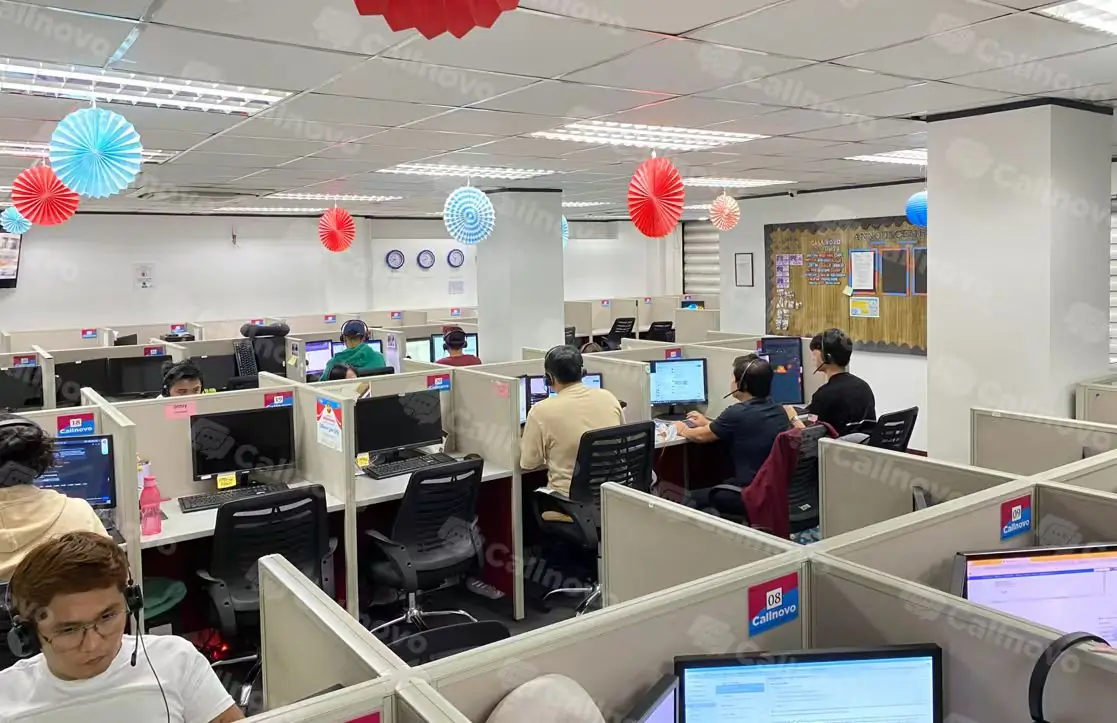
The real request was larger: redesign how the studio handled every customer interaction from first contact through post-visit follow-up. Within one week, four bilingual Chinese-English agents were live.
The team size was intentional. Two agents covered the heaviest booking windows, one protected weekend and overflow volume, and one focused on confirmations, follow-up, review response, and the backlog of calls that had built up during the spike. That gave the studio coverage across the moments when demand actually arrived, instead of simply adding generic headcount.
From the client’s side, the change felt simple: the phone was answered, the appointment was confirmed, and the follow-up happened on time. Behind that simplicity, Callnovo rebuilt the front desk into a documented workflow instead of a series of interruptions.
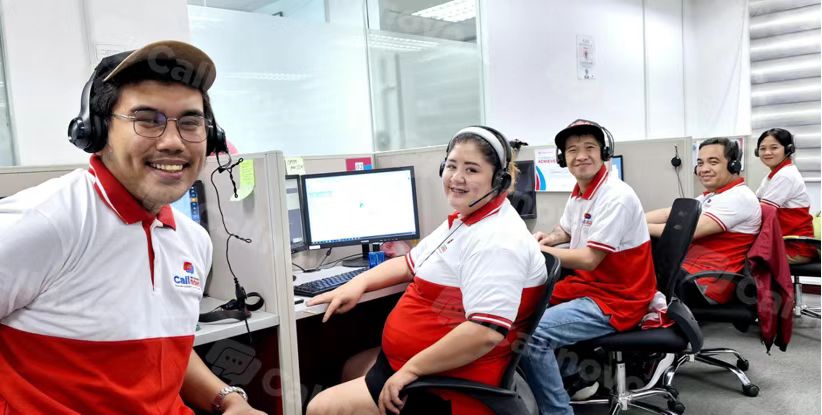
Every call first became a structured intake record. Agents confirmed whether the caller was a new client, a returning client, someone changing an existing appointment, or someone calling with a complaint. Because the team covered both Chinese and English, the studio did not have to choose between cultural fluency in one language and clear, natural explanations in the other.
Booking work moved out of Lisa’s mental queue and into a controlled process. New appointments were logged and confirmed by message immediately. Rescheduling no longer required Mr. Wang to step out of a treatment room. Cancellations triggered a live attempt to fill the open slot instead of leaving the therapist idle. Before each visit, clients received a reminder with the appointment time, address, arrival notes, and cancellation policy.
The team also turned Mr. Wang’s informal answers into a shared response standard. Pricing, first-visit expectations, treatment length, therapist availability, payment questions, parking instructions, and late-arrival rules were documented once, then answered consistently. That removed the tiny variations that happen when a busy front desk has to improvise the same answer fifty times a day.
Review management became part of the same operating rhythm. Callnovo agents monitored Yelp and Google, thanked positive reviewers, and responded to negative ones with specific acknowledgment instead of generic apology language. If a review mentioned a missed call, scheduling error, or long wait, the response named the issue and explained what had changed. In several cases, clients updated their reviews after the studio resolved the underlying issue.
The last piece was client memory. Therapist preferences, pressure preferences, preferred appointment windows, and post-visit follow-up notes were no longer trapped in Mr. Wang’s head. Only client-approved service preferences were documented, and access was limited to authorized team members. Returning clients stopped feeling like they had to explain themselves from the beginning each time.
Three months later, the numbers told the story
After three months, the business looked different.
For this case, VIP client share means the share of bookings from repeat, membership, or high-frequency clients. Therapist utilization means booked treatment hours divided by available therapist hours.
Peak-hour call answer rate rose from 58% to 98%. Nearly every incoming call was now answered. The callers who had previously gone to competitors were now being routed into a booking workflow.
VIP client share grew from 22% to 40%. Consistent, personalized service helped more first-time visitors become repeat or high-frequency clients. Preferences were remembered. Reminders were proactive. Follow-up felt professional.
The Yelp rating climbed to 4.9 stars. Active review management, combined with a genuinely improved booking experience, reversed the negative trend that had started during the chaotic weeks after the social media spike.
Therapist utilization increased by 22%. Better scheduling, fewer no-shows, faster cancellation backfill, and cleaner appointment records meant therapists spent more time in sessions and less time idle because of booking gaps.
Mr. Wang had not expected a phone support operation to understand the business well enough to improve how it ran. He had thought of customer service as answering questions. What he got was a team that managed the entire front-of-house communication layer so he could focus on the work that made clients come back.
The lesson for local service businesses
This was not only one wellness studio’s problem. It is the same transition any local service business faces when demand grows faster than its operations.
That demand can come from TikTok, local press, word of mouth, paid ads, a strong Google review, or simply sustained growth. The source matters less than the pressure it creates.
Studios, clinics, salons, spas, wellness centers, repair shops, and appointment-based local businesses all share the same risk: the customer journey often starts before the team is ready to manage it.
The client does not experience “front desk workload.” The client experiences an unanswered call, a confusing booking process, no confirmation, a long wait, or a therapist who does not know their preferences.
If that first contact goes badly, many clients never make it to the door. The ones who do arrive may already be carrying frustration from the booking process.
The businesses that handle growth well treat customer communication as an operating system. Bookings, confirmations, reminders, cancellations, review responses, and client profiles are designed, documented, and run consistently.
The businesses that struggle treat communication as a task that whoever is available handles when they have time.
Questions to ask before the next growth moment
Before the next surge arrives, ask:
- What happens to incoming calls when the front desk is busy?
- How long does a client wait between booking and receiving a confirmation?
- When a client cancels, how quickly does someone try to fill that slot?
- How many reviews in the last 90 days have received a response?
- Where are client-approved preferences, sensitivities, and special notes stored?
- If your best staff member left tomorrow, would client history leave with them?
For Mr. Wang, the short-form video spike forced these questions into the open. Most businesses get to ask them before the pressure arrives. That is the better time to answer them.
Booking support is part of the service experience
For local service businesses, the customer journey does not start when the client walks in. It starts when they first try to make contact.
If the phone is not answered, the appointment is not confirmed, the cancellation is not backfilled, or the review is not addressed, the service experience is already being shaped before the therapist, technician, clinician, or stylist ever meets the client.
Callnovo helps service businesses build that communication layer with bilingual support teams, appointment workflows, managed customer support, active review handling, VIP profile management, and HeroDash visibility.
If your front desk is carrying more demand than it can reliably manage, the problem may not be effort. It may be that the customer journey has outgrown the system around it.