

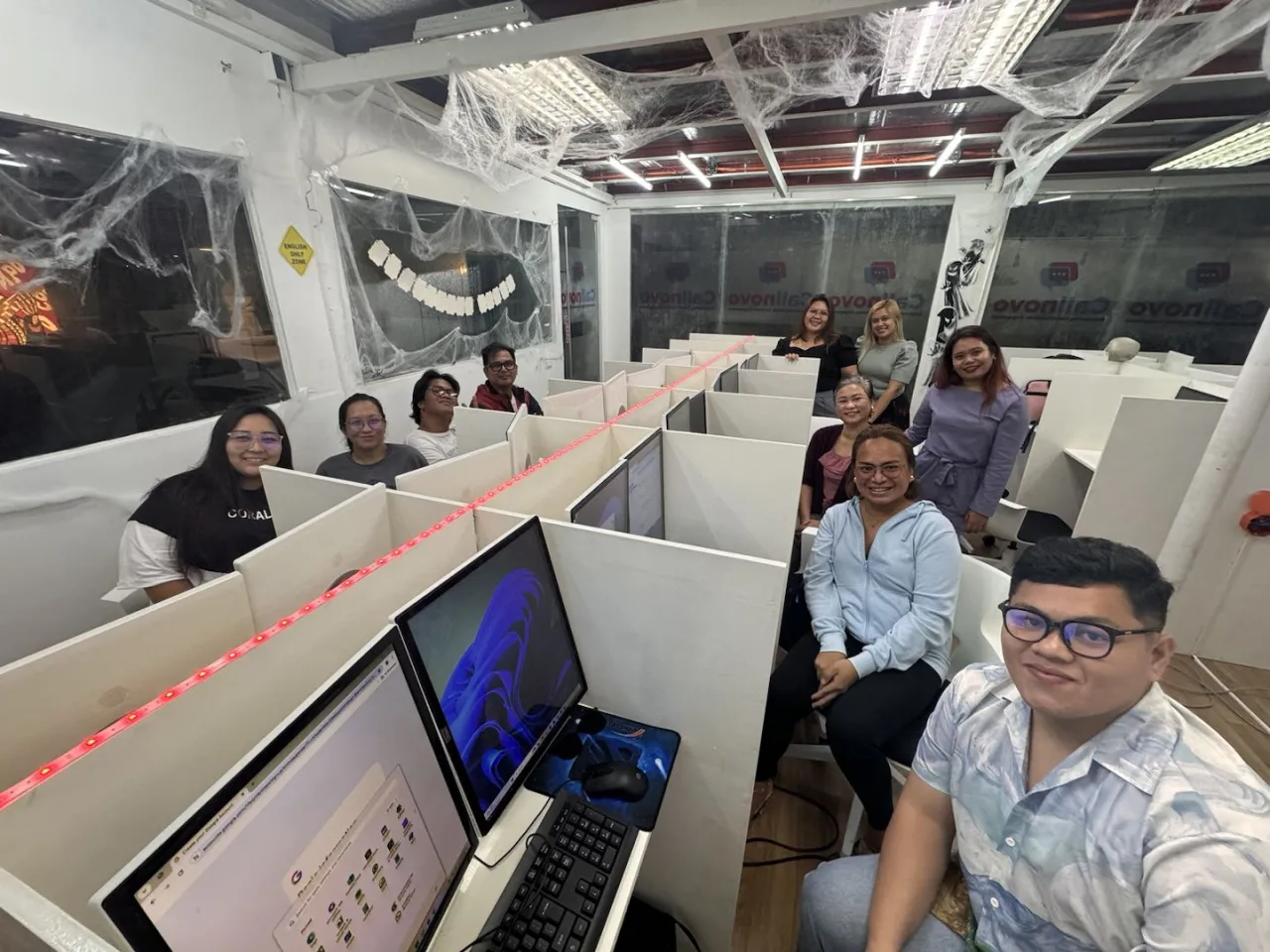
The Philippines can be a good fit for outsourced customer support when you need a large English-speaking phone team or overnight coverage for North America. Start by checking the hours, languages, channels and compliance requirements your team needs. A percentage-saving claim on its own won’t tell you whether the service fits your account.
Why the Philippines remains a strong call-center location
The country’s IT-BPM industry, which covers information technology and business process management, has a large pool of experienced English-speaking customer-service workers. English is used throughout education, business and government, so agents can handle voice conversations without translating each exchange. This helps when a call requires judgment about tone or escalation as well as knowledge of the script.
The Philippines is UTC+8, so a normal Manila day shift can cover overnight hours in North America. A second location can handle daytime collaboration, sales handoffs or another language. This gives you a way to cover more hours, but you still need to check each Philippine provider’s capabilities.
How English voice quality depends on process
English is used across education, government, media and business in the Philippines. That gives many agents a strong base for written and spoken customer support. It does not, by itself, show whether an agent understands a customer’s problem or can take the right next action.
Ask for a recorded or live sample from a comparable account. Check product knowledge, empathy, escalation judgment and written follow-up. Then ask how the team turns those observations into coaching and quality review. A good conversation needs more than a familiar accent: it needs approved knowledge, a clear escalation path, call sampling and a way to send feedback to the client.
For a program described as “24/7,” ask to see the actual schedule, handoff window, holiday calendar and escalation SLA. The SLA should state who responds when a case needs more help and how quickly that person must act. A normal Manila shift may cover North American overnight hours, while live collaboration with a US sales or operations team may require another shift or delivery location.
What a Philippine provider can handle
Common programs include inbound customer care, order and delivery questions, booking support, technical triage, appointment scheduling, back-office follow-up and after-hours answering. Technical triage means assessing a problem and sending it to the right person to resolve it. You can combine voice, email, chat and ticket work, but plan staffing around how much work arrives through each channel. A busy phone team needs different hiring, coaching and quality controls from a low-volume email queue.
Before comparing vendors, write down:
- the hours that genuinely need a live response;
- the languages and markets served;
- expected contacts by channel and peak period;
- escalation rules and the systems agents must use;
- the customer data and retention requirements involved.
Give providers that brief when you ask about “24/7” or “all languages.” It lets them answer for the hours and languages you actually need.
Cost: ask for a model, not a headline percentage
Published rates are uncommon in the industry. Callnovo publishes starting packages as a reference point: a dedicated English agent from US$5.80 per hour for the stated package, a shared English seat from US$650 per month, and AI voice from US$300 per month for 500 minutes. These are Callnovo packages, not a universal Philippine rate or a quote for every program. Language, hours, volume, channel mix and tooling change the total cost.
Ask each shortlisted provider to calculate cost per contact using your actual volume. Include recruitment, training, management, quality assurance, telephony, software, holidays, security controls and the cost of escalation. Use the same costs and volume assumptions when comparing a Philippine team with nearshore, in-house or AI alternatives.
How the Philippines compares with India, Latin America and Eastern Europe
Most buyers comparing locations are choosing between a few trade-offs: language, working hours and where the data can go.
| Location | Often chosen for | Hours ahead of New York (US daylight time) | Check carefully |
|---|---|---|---|
| Philippines | English voice support at scale; overnight coverage for North America | 12 | European-language depth, EU data residency, live overlap with US working hours |
| India | Technical support, back-office work and very large programs | 9.5 | Voice fit for your customers: listen to sample calls from a comparable account |
| Latin America (e.g. Colombia, Mexico) | Spanish support and same-day collaboration with US teams | 1–2 hours behind | Overnight coverage, availability of other languages |
| Eastern Europe | European languages and an EU or EU-adjacent data position | 6–7 | Higher cost than Asian locations, smaller English voice teams |
Clock changes move these offsets by about an hour for part of the year. Many programs use more than one location, for example a Philippine team for overnight English calls and a nearshore team for Spanish during US business hours. Whichever location you shortlist, ask for the same evidence: the team assigned to your account, sample calls, the schedule and the escalation process.
When the Philippines may be the wrong fit
There are clear cases where another model deserves priority:
- You need deep European-language coverage. A vendor promising many languages from one delivery center should show the actual staffing bench for your hours and volume.
- Your data must remain in the EU. Offshore transfer can require a lawful mechanism and appropriate contracts under GDPR Chapter V. Residency requirements may be a hard constraint.
- Your agents must work closely with a US sales or operations team. The same time-zone difference that makes overnight coverage efficient can make live collaboration expensive.
- The program is too small to justify a dedicated team. A shared or AI-first model may be the more sensible starting point.
Compliance and due diligence
The Philippines has the Data Privacy Act of 2012 (Republic Act No. 10173), enforced by the National Privacy Commission. That destination-side framework does not replace the obligations of the company sending customer data offshore. Confirm the roles of the parties, access controls, retention, incident response, sub-processors, recording rules and cross-border transfer mechanism before launch.
Also ask for evidence that maps to your program:
- How many agents are available for the language and hours you need?
- What happens when an agent cannot resolve a case?
- Which systems can the team access, and how is access removed?
- How are calls reviewed and coaching documented?
- Can you hear examples from a comparable live account?
- What is the handoff window, and who owns an unresolved case after the shift changes?
Callnovo in the Philippines
Callnovo has operated multilingual outsourced contact-center programs since 2004, with the Philippines among its delivery locations alongside Canada, China, Bolivia and Nicaragua. That footprint can be useful when one program needs Philippine English coverage and another language or time zone from a different location.
To discuss your options, share your languages, channels, volume, required hours and escalation needs. Ask the provider to explain which parts a Philippine team can handle well and which would need a different setup.
Request a quote or compare the broader BPO outsourcing model.
Frequently asked questions
Why do companies outsource call center work to the Philippines?
The combination of English voice capability, a mature IT-BPM workforce and UTC+8 overnight coverage makes the Philippines attractive for many North American support programs.
How should I compare Philippine call centers?
Compare the actual team, hours, languages, escalation process, security controls and modeled cost per contact. A global employee count or a generic “up to 60%” claim is not enough.
Is customer data safe with a Philippine call center?
Safety depends on the provider’s controls, contract and operating model. The Philippines has a dedicated privacy law, while the customer’s own obligations—including GDPR requirements where applicable—still travel with the data.
Philippines or Latin America for outsourced support?
Choose by operating hours and language depth. The Philippines is often strong for English overnight coverage; Latin America may be a better fit when the team needs same-day collaboration with US staff or deeper Spanish coverage.