

Privacy note: To protect customer confidentiality, identifying details have been removed.
Key Takeaways
- A US$5 accessories credit resolved what could have been a US$60+ return and a public 1-star review. The agent diagnosed the real issue — ear tip fit, not a hardware defect — and guided the fix without refunding or escalating.
- The right diagnosis came from pre-launch product training, not improvisation: agents physically tested the ANC headphones and learned that ~90% of noise-canceling complaints trace to physical seal, not hardware.
- Every interaction is scored automatically. HeroDash generated a 96/100 quality report across product knowledge, resolution process, and service tone — so the founder could confirm the process was followed without reading the thread.
- Native English agents in North American time zones meant a fluent reply at 8pm on a Friday — and a data-driven staffing model kept capacity matched to volume through peaks and slow periods alike.
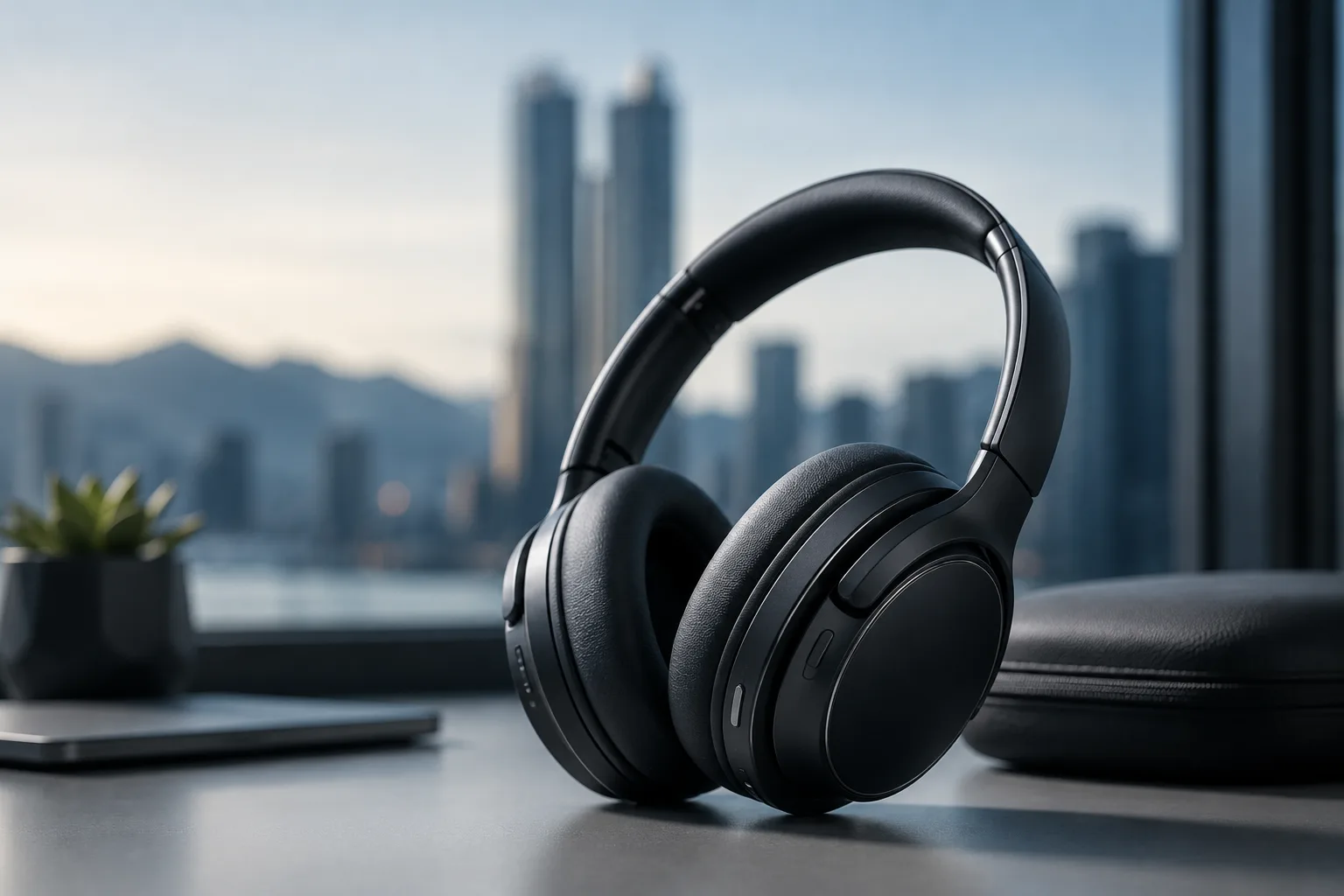
A noise-canceling headphone brand. An angry buyer. A Friday-night refund threat. And a noise-canceling headphone support team operating thousands of miles away that resolved it without escalating, without refunding, and without the brand founder ever knowing there was a crisis — until he saw it was already over.
What Alex sent at 8pm on a Friday
It was Friday evening, US time. Alex had just put on his new smart noise-canceling headphones after a long week. He could still hear street noise. He was immediately certain the product was defective.
He left a refund request in the brand’s backend and a clear warning:
The noise canceling on these headphones is completely useless. I want a refund, otherwise I’m leaving a bad review.
The brand founder was overseas, spending Saturday morning with his family. He had no idea the message existed. The support team handled it. Here’s the reply Alex received:
Hi Alex — completely understand wanting some peace and quiet after a long week. ANC (active noise cancellation) works best with a strong physical seal between the ear cup and the ear. We’d suggest trying the size L ear tips from the accessory box — they can significantly improve the seal for some ear shapes and may make a real difference. We’ve also added a US$5 no-minimum accessories credit to your account. Hope you enjoy the rest of your weekend.
Alex’s reply came back within the hour:
Switched to the larger ear tips and the noise is gone. Thank you for the professional guidance — have a great weekend!
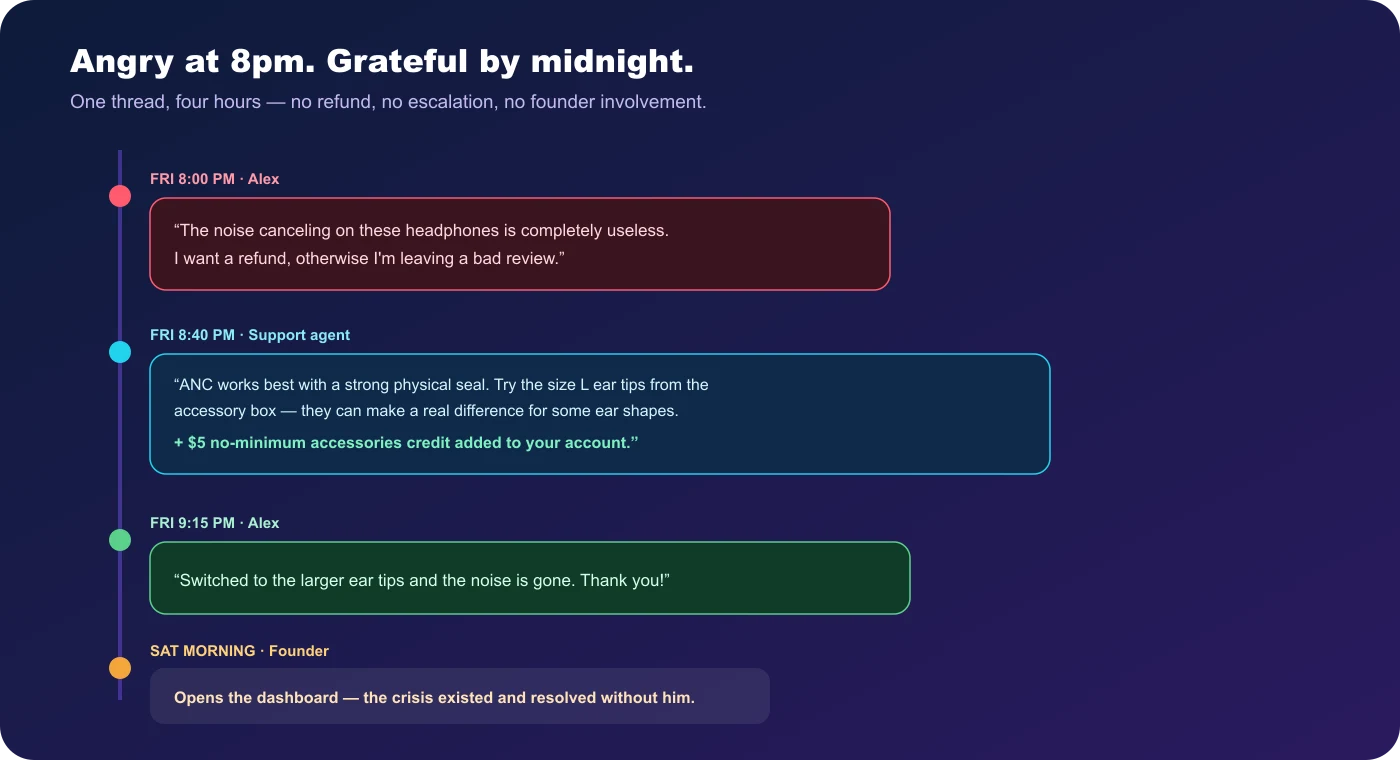
The founder saw all of this on Saturday morning. The crisis had existed and resolved without him. No refund processed. No bad review posted. A buyer who had been angry at 8pm was satisfied by midnight.
This wasn’t luck. Four specific operational systems made it possible. Here’s what each one did.
Q1: How did the agent know immediately that the problem was ear tip size — not a hardware defect?
This is the question that matters most, because the wrong diagnosis produces the wrong resolution. An agent who assumes a hardware defect offers a replacement or a refund. An agent who correctly identifies physical-seal failure guides the customer to a solution that costs nothing and preserves the sale.
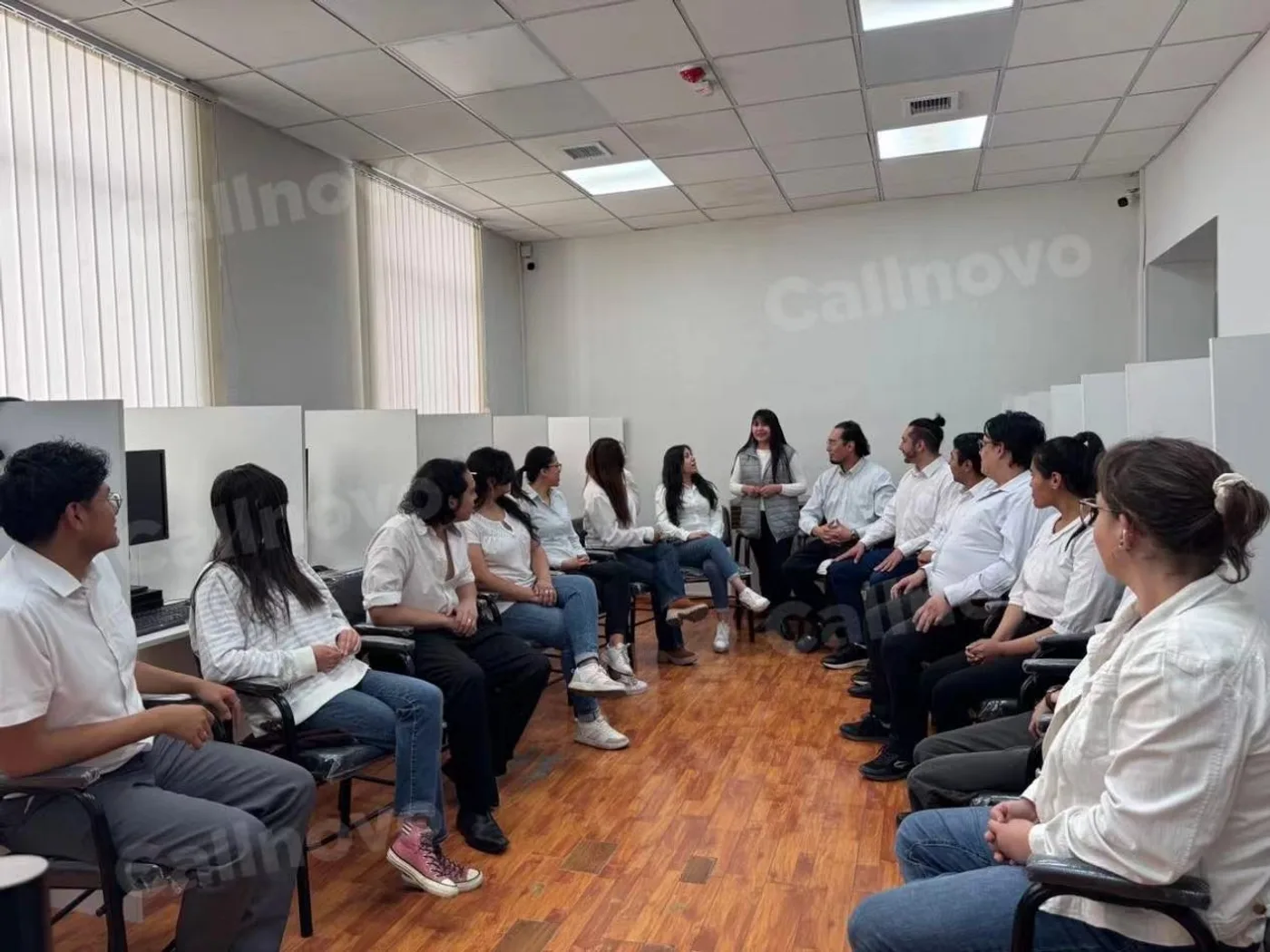
The correct diagnosis came from pre-launch product training that went further than most outsourced support programs go.
Before going live on this account, Callnovo’s support team physically handled the headphones. They tried different ear tip sizes. They tested the ANC mode themselves under different seal conditions. They learned what “noise canceling isn’t working” actually sounds like as a user experience — and they learned that roughly 90% of noise-canceling complaints for in-ear and over-ear headphones trace back to physical-seal problems rather than hardware failure.
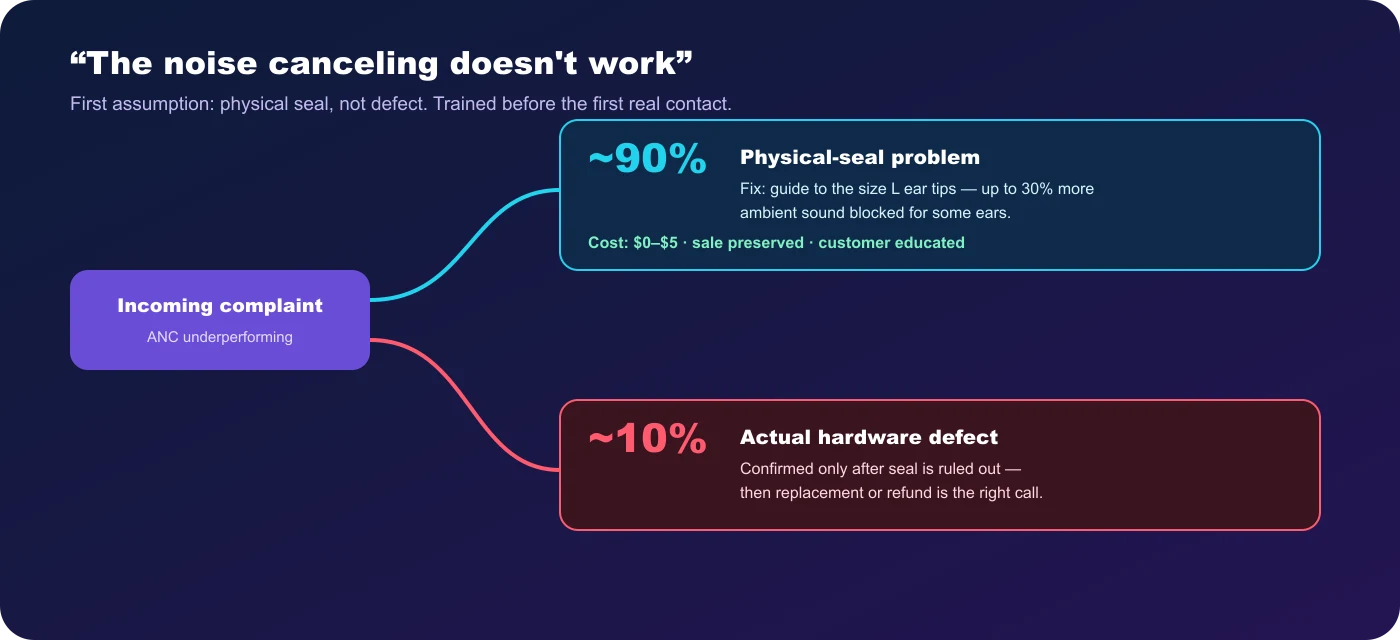
The training team’s guidance to agents was specific and scenario-based: “When a customer says ‘the noise canceling doesn’t work,’ your first assumption is physical seal, not defect. Guide them to the ear tip alternatives — but don’t make them feel like they did something wrong. Say: ‘Since every ear canal is slightly different, the size L tips in the box can block up to 30% more ambient sound for some users — it’s worth a quick try.’”
That’s the sentence the agent used — almost verbatim — with Alex. Not because they improvised it under pressure, but because they had practiced exactly this scenario before handling a single real contact. The training produced an agent who could give the right answer immediately, in the right tone, without hesitation.
Q2: When Alex threatened a bad review, how did the agent resolve it correctly — and how does the brand know the right process was followed?
A review threat is the highest-pressure moment in consumer electronics support, because a product’s star rating and its conversion rate move together. The instinct — for both the customer and the agent — is to reach for the fastest resolution. For the customer, that’s a full refund. For an under-trained or under-supervised agent, that’s often agreeing to the refund to close the contact quickly.
Neither outcome is good. A full refund on a product that was working correctly rewards the wrong behavior and signals — to the customer and anyone they tell — that the brand will capitulate under pressure. A US$5 accessories credit that resolves the actual issue costs US$5 and produces a satisfied customer who now understands the product.
The gap between these two outcomes is training plus oversight. The training defines the right process. The oversight confirms it was followed.
In this case, the moment Alex’s ticket closed, HeroDash generated an automatic quality-inspection report — three dimensions, scored independently:
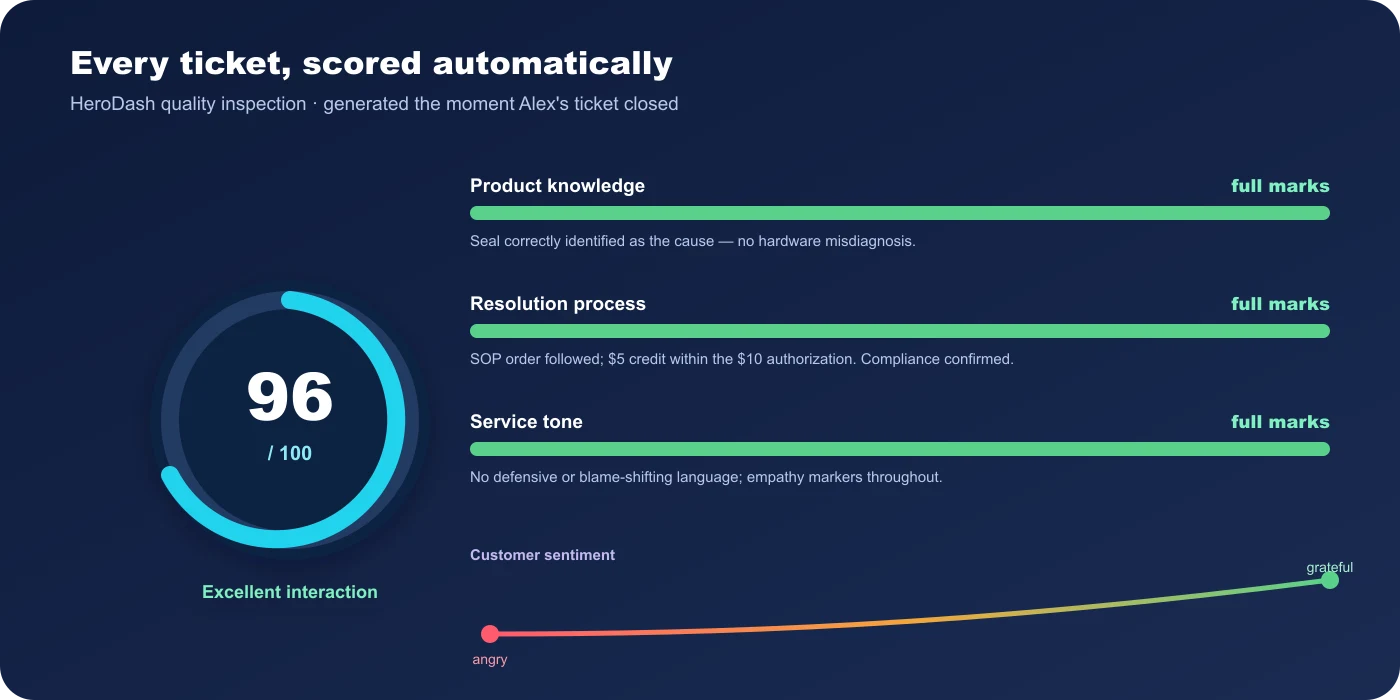
- Product knowledge — full marks. The agent correctly identified physical seal as the cause of ANC underperformance. No misdiagnosis of hardware defect. Technical guidance accurate throughout.
- Resolution process — full marks. The agent followed the defined SOP sequence: guide troubleshooting first, confirm the outcome, offer compensation only as a follow-up. The US$5 credit was within the agent’s authorized compensation threshold of US$10. Compliance confirmed.
- Service tone — full marks. Customer sentiment shifted from angry to grateful across the interaction. No defensive language detected. No responsibility-deflection language detected. Empathy markers present throughout.
Overall score: 96/100 — excellent interaction.
The founder didn’t need to read the email exchange to know it was handled well. He could open the quality dashboard, filter by date and channel, and see the score and the dimension breakdown in thirty seconds. If the interaction had scored poorly — if the agent had skipped the troubleshooting step, offered a refund without attempting resolution, or exceeded their compensation authorization — an alert would have gone to the operations manager within two hours of the ticket closing, while there was still time to intervene.
That’s the answer to “how do I know my outsourced team is doing the right thing.” Not occasional audits of randomly selected calls — automated scoring of every interaction, with real-time alerts when something deviates from the defined standard.
Q3: Alex messaged at 8pm on a Friday. How was a fluent, natural English response ready immediately?
Time zone management is where most cross-border support operations have their most visible failure. A customer in the US sending a message at 8pm on a Friday should not be waiting until Monday morning — or even the following afternoon — for a human response. By then the emotional context has shifted. A customer who was frustrated on Friday night and heard nothing until Monday is not in a recoverable state.
Callnovo’s deployment for this brand included native English-speaking agents operating in North American time zones — not overnight-shifted agents working outside their natural hours, but a team whose working hours naturally align with US evening and weekend contact patterns. The coverage isn’t a workaround. It’s a structural deployment decision made at the start of the partnership.
With 35 global operations centers covering 150 countries, Callnovo allocates specialist English-language teams based on the time zones that matter for each brand’s customer base — not on where it’s operationally convenient to staff. A brand selling into the US needs coverage during US active hours. That’s a North American team, not an Asian team on a night shift.
Alex’s Friday-night message reached an agent in the middle of their normal working day. The response arrived quickly, in natural American English, from someone who wasn’t tired, wasn’t at the end of a long shift, and wasn’t struggling with an unfamiliar time of day. The quality of the response reflected the quality of the conditions under which it was produced.
Q4: Peak events can spike contact volume 5x. Slow periods drop it sharply. How does the team adjust without the brand absorbing the cost either way?
Fixed staffing for a variable-volume operation is one of the most common and most expensive mistakes in ecommerce customer service. Staff for the peak, and you carry significant idle cost during normal periods. Staff for normal volume, and you’re overwhelmed during peak events — precisely when service quality matters most and failure is most visible.
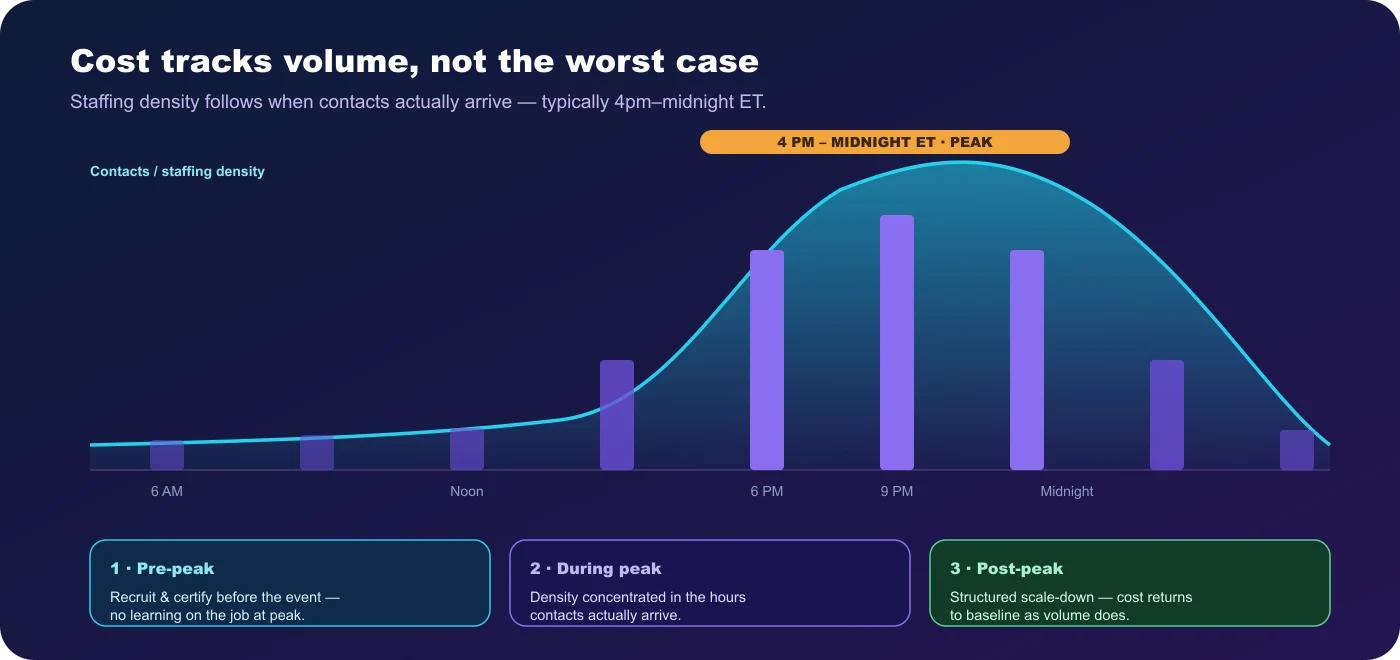
Callnovo’s project-management approach for this brand runs on three mechanisms, one for each phase of the volume cycle:
- Pre-peak recruitment and training. Based on historical sales data and the promotional calendar, the project manager identifies upcoming peak periods and opens recruitment early — far enough ahead to complete the same product training and quality certification the original team went through. Agents going live for a peak event know the product, know the SOPs, and have passed the assessment. They aren’t learning on the job during the highest-volume period of the year.
- Data-driven peak scheduling. Historical contact data identifies the specific hours when volume concentrates. For US consumer electronics, that’s typically 4pm to midnight Eastern — the hours when customers are home from work, unboxing products, and hitting issues. The highest-density staffing aligns with those hours rather than spreading evenly across 24.
- Structured post-peak scaling. When volume returns to baseline, the project manager runs a structured reduction — planned in advance, communicated clearly, executed without service disruption. Support cost returns to its normal level as contact volume does, rather than carrying peak headcount through the slow months.
The result is a support operation whose cost tracks its volume rather than its worst-case scenario — and whose quality stays consistent across high- and low-volume periods because the staffing decisions are data-driven rather than reactive.
What the Alex case actually demonstrates
Alex’s interaction was a US$5 resolution of what could have been a US$60+ return and a public one-star review. The math is straightforward. The system that produced it is not — it required the right training to produce the right diagnosis, the right quality infrastructure to confirm the right process was followed, the right time-zone deployment to produce a response at 8pm on a Friday, and the right staffing model to ensure capacity existed when it was needed.
None of those four elements is expensive relative to the cost of getting them wrong. A single preventable return on a premium consumer-electronics product, plus one negative review that suppresses conversion on the sales that follow, costs significantly more than the support infrastructure that would have prevented both.
For 3C brands asking where to find technical support that actually resolves issues — not just responds to them — the answer isn’t engineers who know the product. It’s a support team trained deeply enough to diagnose correctly on the first contact, operating in the right time zones to respond when customers actually reach out, and monitored closely enough that the brand can confirm the right thing happened without reviewing every interaction by hand.
That’s what resolved Alex’s complaint before the founder woke up on Saturday morning.
FAQ
How did the agent know the noise-canceling problem was ear tip size, not a hardware defect?
Pre-launch product training. Before going live, Callnovo’s agents physically handled the headphones and tested ANC under different seal conditions, learning that about 90% of noise-canceling complaints trace to physical seal — not hardware failure. So the first assumption for “ANC doesn’t work” is ear tip fit, and the agent guided Alex to the size L tips.
How is outsourced support quality monitored on every interaction?
The moment a ticket closes, HeroDash generates an automatic quality-inspection report scoring three dimensions independently — product knowledge, resolution process, and service tone. Alex’s interaction scored 96/100. If it had scored poorly, an alert would reach the operations manager within two hours, while there is still time to intervene.
How do you get a fluent English response at 8pm on a Friday?
Native English-speaking agents deployed in North American time zones — not overnight-shifted agents working outside their natural hours. With 35 global operations centers covering 150 countries, Callnovo allocates teams to the time zones a brand’s customers actually contact from, so a US buyer’s Friday-evening message reaches an agent in the middle of their normal workday.
How does a support team scale for 5x peak volume without idle cost the rest of the year?
Three mechanisms: pre-peak recruitment and training completed before the event (so peak agents are already product-certified), data-driven scheduling that concentrates staffing in the hours contacts actually arrive (typically 4pm–midnight ET for US consumer electronics), and structured post-peak scaling so cost returns to baseline as volume does.
Selling consumer electronics in North America and dealing with late-night complaint escalations, return threats, or quality-monitoring gaps? Explore the HeroDash platform and its AI quality inspection, Callnovo’s specialist English-language support teams, or talk to our team about what the right support setup looks like for your product category.
If you are still at the stage of deciding whether to run this in-house at all, the cost structure and the usual switching triggers are laid out in how ecommerce sellers outsource customer service.
Customer name and scenario details reflect a real support interaction; brand identity is withheld at the client’s request. QC scores and compensation-authorization thresholds reflect actual operational parameters for this account.