Privacy note: To protect customer confidentiality, identifying details have been removed.
Key Takeaways
- A missing strikethrough price can become a product-trust problem. Once buyers question the discount, they may also question projector specs such as ANSI lumens, native resolution, contrast ratio, and throw distance.
- EU projector support is not generic ecommerce support. Agents need product knowledge, native-language judgment, and enough regulatory awareness to avoid turning a pricing concern into a formal complaint.
- Evening coverage matters because review risk does not wait for office hours. The first overnight window after a frustrated review or message is often the difference between recovery and lasting listing damage.
- In one active Callnovo partnership, the support model helped the seller reach a 40% lower return rate, improve store rating from 3.9 to 4.8, and maintain 98% CSAT.
Policy note: This article discusses support operations, not legal advice. The Amazon reference-pricing timing is based on a seller-facing update reviewed for this specific account; it should not be read as a public, uniform rule for every EU marketplace. Sellers should verify current requirements inside their own Seller Central account.
What Changed, and Why Projector Sellers Felt It Fast
According to a seller-facing Amazon update reviewed for this account, a reference-pricing display change took effect for the client’s affected listings on April 23, 2026. The update indicated that a crossed-out or strikethrough price could require qualifying recent transaction history to display. If that history was not available, the reference price could stop appearing on the listing.
For some categories, that is a listing presentation issue. For projector sellers in Europe, it can become a trust issue.
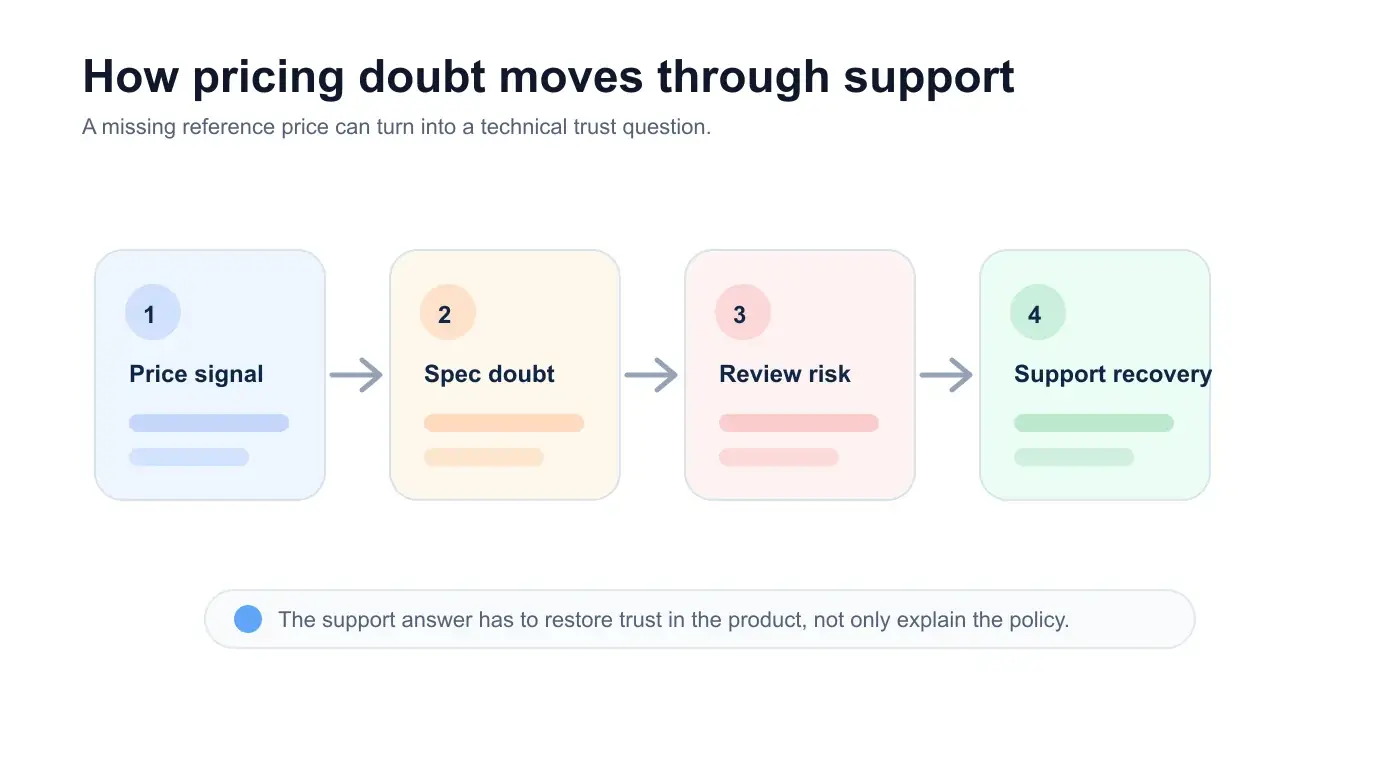
Projector buyers research carefully. They compare brightness, resolution, contrast, throw distance, latency, warranty, and reviews. A removed price signal can make the buyer ask a bigger question: if the old price is no longer shown, was the discount real? And if the discount is questionable, what else should be questioned?
That doubt does not stay on the pricing line. It moves to the specs.
Why Europe Makes the Queue Harder
European buyers already operate in a pricing environment where transparency matters. EU consumer rules around price reduction announcements are shaped by the Price Indication Directive and later consumer-protection updates such as Directive (EU) 2019/2161. Article 6a of the consolidated Price Indication Directive generally requires a price-reduction announcement to indicate the prior price, and defines that prior price as the lowest price applied by the trader during a period of not less than 30 days before the reduction. Sellers still need legal counsel for compliance. Support agents should not give legal conclusions; they should explain what the support team can verify, what the marketplace display shows, and when the case needs escalation.
A buyer in Germany may ask whether the missing reference price means the listing was misleading. A buyer in France may use language that implies a formal complaint. A buyer in Italy may connect the pricing question to warranty or legal guarantee language. A buyer in Spain may ask whether the advertised discount was a real previous sale price.
Those are not the same conversation translated four times. They are four local conversations with different risk signals.
For a projector seller, the situation gets more complex because the buyer’s next question is often technical:
| Buyer concern | What the agent must be able to explain |
|---|---|
| ”Was the discount real?” | The marketplace rule, the seller’s pricing history context, and what support can and cannot verify |
| ”Are the lumens inflated too?” | ANSI lumens vs. informal brightness claims, testing conditions, and expected variance |
| ”Is it really native 1080P?” | Native resolution, supported input resolution, and common listing confusion |
| ”Why does my image look different?” | Room lighting, screen surface, throw distance, keystone correction, and source quality |
| ”Should I return it?” | Troubleshooting path, warranty route, and escalation criteria |
Three Queue Patterns We See After Pricing Trust Breaks
1. The pricing question becomes a spec challenge.
A buyer asks why the strikethrough price disappeared. The agent explains the policy. The buyer then asks, “If the old price was not visible anymore, how do I know your 800 ANSI lumens claim is accurate?”
Now the conversation is no longer about pricing. It is about product integrity. A generic agent will struggle here because the answer requires technical explanation, not reassurance.
2. The local-language complaint carries legal subtext.
German, French, Italian, Spanish, Dutch, and Polish buyers do not all frame consumer complaints the same way. A native speaker can hear when the buyer is merely confused, when they are angry, and when they are preparing to escalate.
That judgment matters. A translated script can sound evasive or accidentally confirm the buyer’s suspicion.
3. The late-night message becomes tomorrow’s review problem.
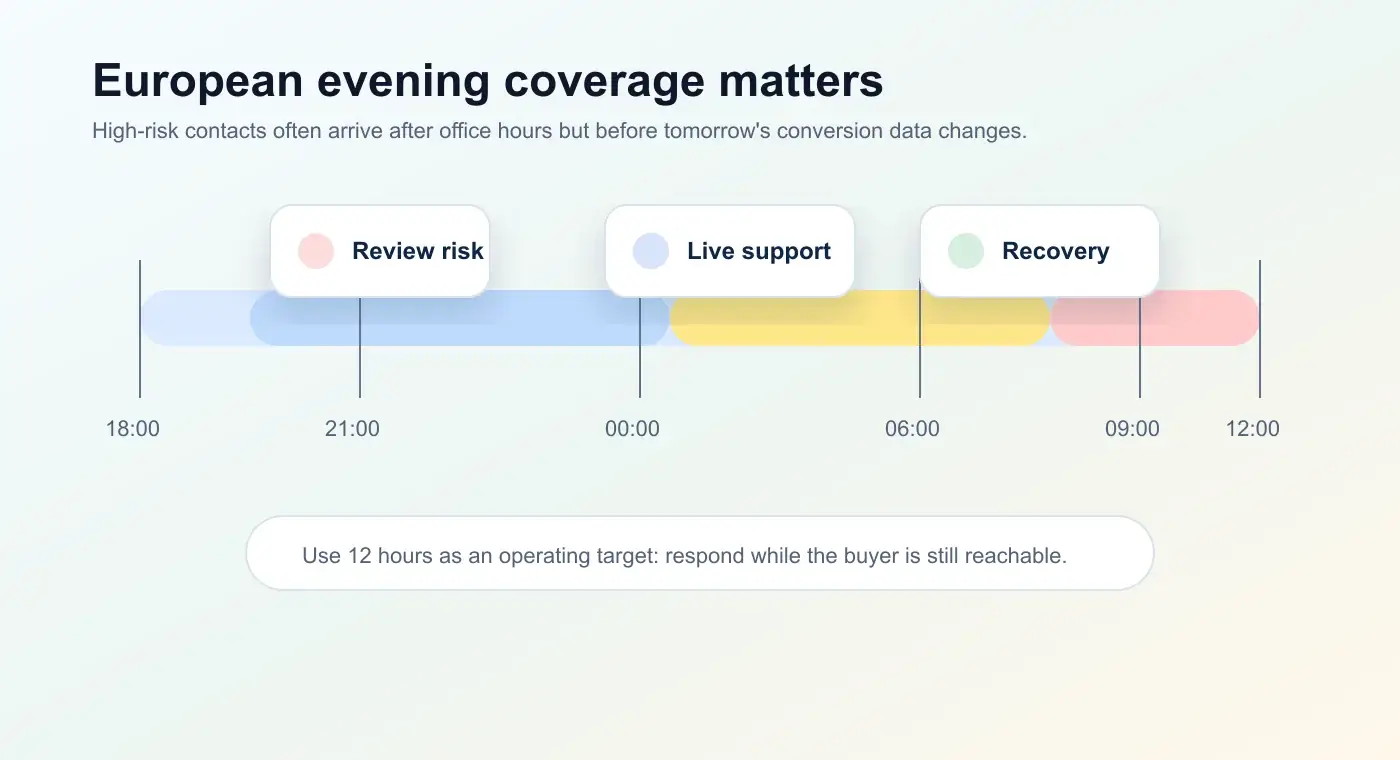
Many high-risk contacts happen after local office hours. The buyer compares listings at night, notices the missing price signal, reads negative reviews, and sends a message or posts a review before going to sleep.
We treat the first 12 hours as an operating target, not an algorithm claim. If the team can respond while the buyer is still reachable, recovery is still possible. If support waits until the next business day, the buyer may already have returned the product, edited the review, or warned other shoppers.
Agent Response Matrix
| Buyer question | Risk signal | Safer support answer | Escalate when |
|---|---|---|---|
| ”Why did the old price disappear?” | Pricing trust concern | Acknowledge the concern, explain the seller-facing marketplace display change for this listing, and avoid claiming a legal conclusion. | The buyer alleges deception, fraud, or a formal complaint. |
| ”Was the discount fake?” | Integrity concern | Explain what support can verify from order and listing context, then route any pricing-history dispute to the account owner. | The buyer requests legal proof or threatens regulatory action. |
| ”Are the lumens fake too?” | Spec trust has spread | Explain ANSI lumens, test conditions, and setup variables in plain language. | The buyer provides measurement evidence or claims false advertising. |
| ”Should I return it?” | Return intent | Move into troubleshooting, setup guidance, warranty options, and documented next steps. | The product may be defective or the buyer is within a high-risk review window. |
What the Right Support Response Looks Like
One projector seller operating across Germany, France, and Italy rebuilt its support response around three principles.
1. Emotion First, Information Second
When a buyer feels misled, opening with a policy explanation is usually too early. The first job is to acknowledge the concern.
A better opening sounds like this:
“I understand why this looks concerning. If I saw a price display change on a technical product I was comparing, I would want a clear explanation too.”
Only after that acknowledgment should the agent explain what changed on the marketplace side. Then the conversation can shift back to product value: tested brightness, native resolution, warranty process, setup conditions, and real performance.
This sequence matters because the buyer is not only asking for facts. They are asking whether the brand is still trustworthy.
2. Native-Language Agents With Product Training
For the German, French, Italian, and Spanish markets, the support team used native or near-native agents who understood the local complaint style and had a projector-specific SOP.
The SOP did not ask agents to memorize marketing copy. It trained them on the questions buyers actually ask:
- how ANSI lumens are different from casual brightness claims;
- why room lighting affects perceived brightness;
- how native resolution differs from supported input resolution;
- why keystone correction can affect image quality;
- when a case should be escalated to technical review;
- what should be avoided in compliance-sensitive pricing conversations.
That combination is the point. Language coverage without product knowledge is thin. Product knowledge without local-language judgment is risky.

3. Evening Coverage for the Review-Risk Window
The seller also adjusted coverage around European evening hours. The goal was not a vague “24/7” promise. The goal was to have trained agents online when the highest-risk contacts appeared.
For projector buyers, that often means 9 p.m. to midnight local time. People research home entertainment purchases after work, compare products after dinner, and write reviews when the frustration is fresh.
HeroDash helped the team monitor these conversations through quality workflows, product tags, escalation reasons, language queues, and review-risk markers. The operational question became visible: which contacts were pricing-only, which had turned into spec distrust, and which needed technical escalation before a return request formed?
Results After the Support Model Changed
Projector Support Results with Callnovo
The results did not come from a single script. They came from matching the support model to the actual buyer anxiety.
The seller’s return rate became 40% lower than its previous baseline after the new support model was in place. This is a relative decline measured against the prior same-length baseline window; exact order volume and week count are withheld for client confidentiality. Store rating improved from 3.9 to 4.8 during the post-change recovery window. CSAT stayed stable at 98%, even while pricing and specification questions increased.
These results reflect the support recovery period for this account and should not be read as a guaranteed outcome for every Amazon seller.
The most important change was not only faster response time. It was cleaner diagnosis:
- some contacts were pricing-policy education;
- some were product-spec trust recovery;
- some needed setup troubleshooting;
- some required warranty or replacement escalation;
- some were review-risk contacts that needed immediate senior review.
When all five look the same inside the queue, agents guess. When they are tagged and routed correctly, the team can protect the listing before doubt becomes a return.
What EU Projector Sellers Should Do Now
If you sell projectors or consumer electronics in Europe, do not treat reference pricing questions as a temporary listing inconvenience. Treat them as a support readiness test.
You need four capabilities at the same time:
- Technical product support. Agents should explain ANSI lumens, native resolution, contrast, throw distance, keystone correction, and setup conditions in plain language.
- Native-language coverage. German, French, Italian, Spanish, Dutch, Polish, and other EU markets need more than translated templates.
- Evening support. Cover the hours when buyers research, compare, complain, and review.
- Quality monitoring. Use HeroDash or another operating layer to tag pricing questions, spec challenges, review-risk contacts, escalations, and outcomes.
For adjacent examples, see how technical support affected a German dashcam seller and how service recovery language changes outcomes in ecommerce apology workflows.
FAQ
Why can an Amazon reference pricing change create support tickets?
When a reference or strikethrough price disappears, buyers may question whether the old discount was real. In technical categories, that pricing doubt can spread to product specifications, reviews, and return decisions.
Why are projector sellers especially exposed?
Projector buyers compare technical claims such as ANSI lumens, native resolution, contrast ratio, throw distance, and keystone correction. If trust in pricing weakens, buyers often challenge those specifications too.
What support model works best for EU projector sellers?
The strongest model combines product-trained agents, native-language coverage for EU markets, evening support during high-risk review hours, clear escalation rules, and quality monitoring in HeroDash.
Building Support for EU Projector Markets?
Callnovo helps ecommerce and consumer electronics sellers build multilingual support teams, technical SOPs, evening coverage, review-risk routing, and HeroDash quality monitoring across European markets.
If reference pricing questions are turning into product-spec doubts, the answer is not only a better policy explanation. It is a support operation that can rebuild trust while the buyer is still listening.
Sources and Notes
- EU Price Indication Directive 98/6/EC
- Directive (EU) 2019/2161 on better enforcement and modernisation of Union consumer protection rules
- Amazon reference-pricing timing is based on seller-facing policy context reviewed with Callnovo for this account. Sellers should confirm current requirements inside Seller Central and, where possible, keep a redacted internal screenshot or policy-update title for their own records.
- Performance metrics reflect results from an active Callnovo partnership.