Privacy note: To protect client confidentiality, identifying details have been removed.
Key Takeaways
- Germany’s 3D printer opportunity is real, but the buying window often opens after offshore teams are offline.
- For FDM printers, German-language support has to diagnose warping, stringing, slicer behavior, filament issues, and first-layer problems.
- Native German technical support can shorten evening response windows, protect Amazon account health, and turn repeated issues into product insight.
The German 3D printer market rewards whoever shows up first
Germany is one of Europe’s strongest additive manufacturing markets. Germany Trade & Invest describes Germany as Europe’s industrial additive manufacturing leader, and Formnext in Frankfurt brings together more than 800 exhibitors and more than 38,000 visitors each year.
That matters for consumer and prosumer 3D printer sellers too. The products themselves are competitive. Cross-border 3D printers often offer performance at price points local buyers take seriously. Makers, engineers, small workshops, hobbyists: there is genuine appetite across the market.
But appetite does not convert to sales on its own. And in Germany specifically, there is a gap between when a buyer gets interested and when they actually complete a purchase. That gap is filled with technical questions that need real answers, fast.
Many international brands selling 3D printers in Germany lose customers inside that gap. Not to better products. To whoever answered the question first.
The time zone problem no one solves until it costs them
Germany runs several hours behind many Asian manufacturing and operations teams. That gap sounds manageable until you look at when German buyers actually engage with technical products.
Evening. After work. When the printer is in front of them and the question is immediate.
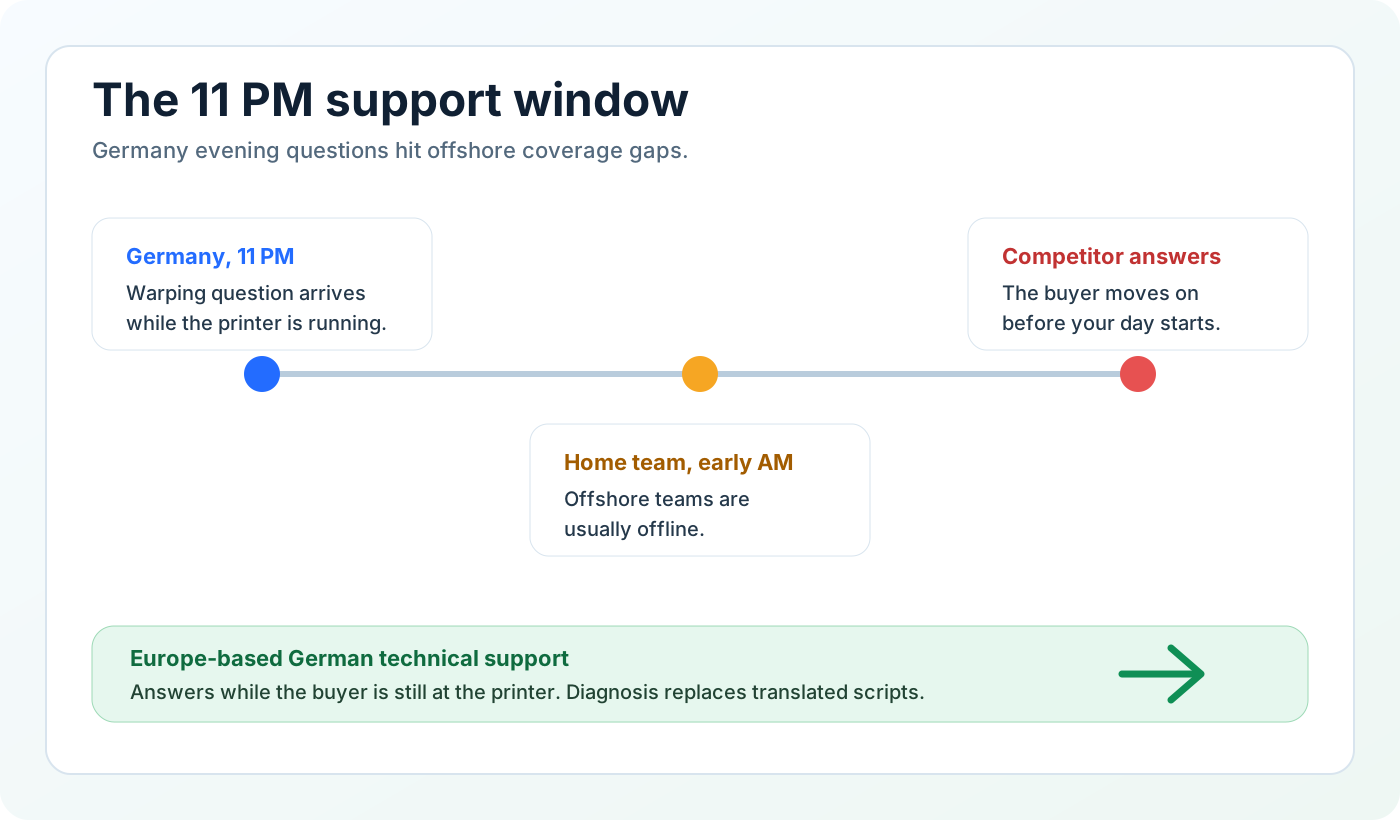
A maker troubleshooting a warping issue at 11pm is not going to wait until morning for an answer. They are going to search, ask on forums, or contact whoever else sells a comparable product. If your competitor has German-language customer support covering local hours and you do not, you are not losing to a better product. You are losing to a faster answer.
For Amazon sellers, this is not just a service-quality issue. Amazon’s own Customer Service by Amazon page emphasizes 24/7 local-language support, evening and weekend coverage, and a fast first response. The safer operating lesson is not “response time is a simple ranking factor.” It is that unanswered buyer questions create account-health risk, negative feedback risk, and conversion risk.
Most teams are not. Most inquiries wait. Most customers do not.
The second problem: technical questions need technical answers
3D printing support is not standard ecommerce customer service. The questions that come in after a purchase are not “where is my order” or “how do I return this.” They are questions that require someone who actually understands how the machine works.
Why is my first layer not adhering?
My extruder is clicking. Is that a clog or a temperature issue?
The slicer software settings I used worked fine last week. Same file, same settings, now the print fails halfway through. What changed?
What filament temperature do you recommend for PETG in a cold workshop, Germany in January, unheated space?
These are real questions from real buyers. They require a support agent who understands FDM printing, knows what “stringing” and “warping” and “layer adhesion” actually mean, and can diagnose a problem from a description rather than just pointing back at the manual.
When a German buyer gets a generic response to a specific technical question, the experience does not just fail to help. It actively undermines confidence in the brand. In Germany, where consumer expectations for product expertise are genuinely high, a support interaction that demonstrates ignorance of the product is often the last interaction that buyer has with that brand.
What “German-language support” actually means, and what it does not
Many 3D printer brands selling in Germany do have some form of German-language customer service outsourcing. The problem is what that usually looks like in practice.
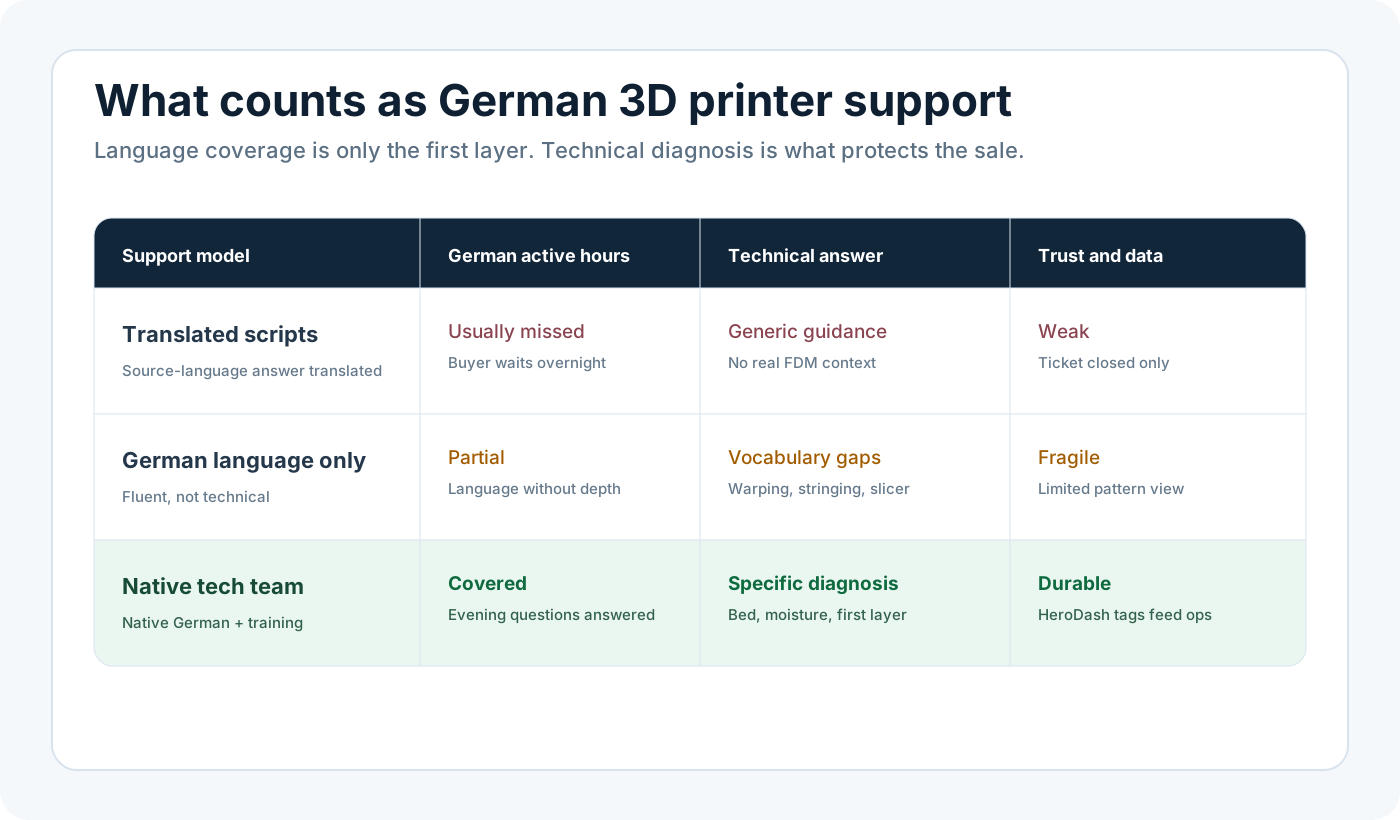
Translation software applied to source-language responses. Agents with functional German who struggle with technical vocabulary. Support hours built around the seller’s time zone rather than the buyer’s. Scripts that cover the obvious questions and fall apart on anything else.
This is not German-language customer support for the German market. It is German-language customer support designed around the seller’s convenience. German buyers can feel the difference immediately. And in a market where word-of-mouth in maker communities travels fast, the reputation effect of inadequate technical support compounds quickly.
The standard that actually works in the German 3D printer market is specific: native German speakers with genuine technical backgrounds, covering German active hours, trained on the specific product they are supporting. Not on general customer service protocols, but on this printer, these failure modes, these common buyer questions.
That is a higher bar than most brands set when they first enter the market. It is also the bar that determines whether they are still in the market two years later.
How Callnovo builds German 3D printer support that actually holds
When technical hardware sellers come to Callnovo for German-language customer support, the setup looks different from what most have tried before.
Native German speakers, European time zone
Every agent covering this market is a native German speaker based in Europe, working hours that cover German buyer activity, including evenings. The 11pm warping question gets a response while the buyer is still at the printer, not the next morning when they have already moved on.
Technical background, product-specific training
Callnovo selects agents with STEM backgrounds for technical product categories. For 3D printers specifically, agents go through hands-on product training before taking a single contact: learning the printer’s common failure modes, the slicer software, the filament behavior questions that come up regularly, and the diagnostic process for the issues buyers actually describe.
When a buyer says their print is warping, the agent knows whether to ask about bed temperature, ambient temperature, filament moisture content, or first layer calibration, because they understand why each of those factors matters.
If you are building the broader operating model for marketplace support, our Amazon seller support outsourcing checklist covers the handoffs, QA routines, and escalation rules that usually decide whether a launch holds up during peak weeks.
HeroDash tracks every interaction and turns it into product intelligence
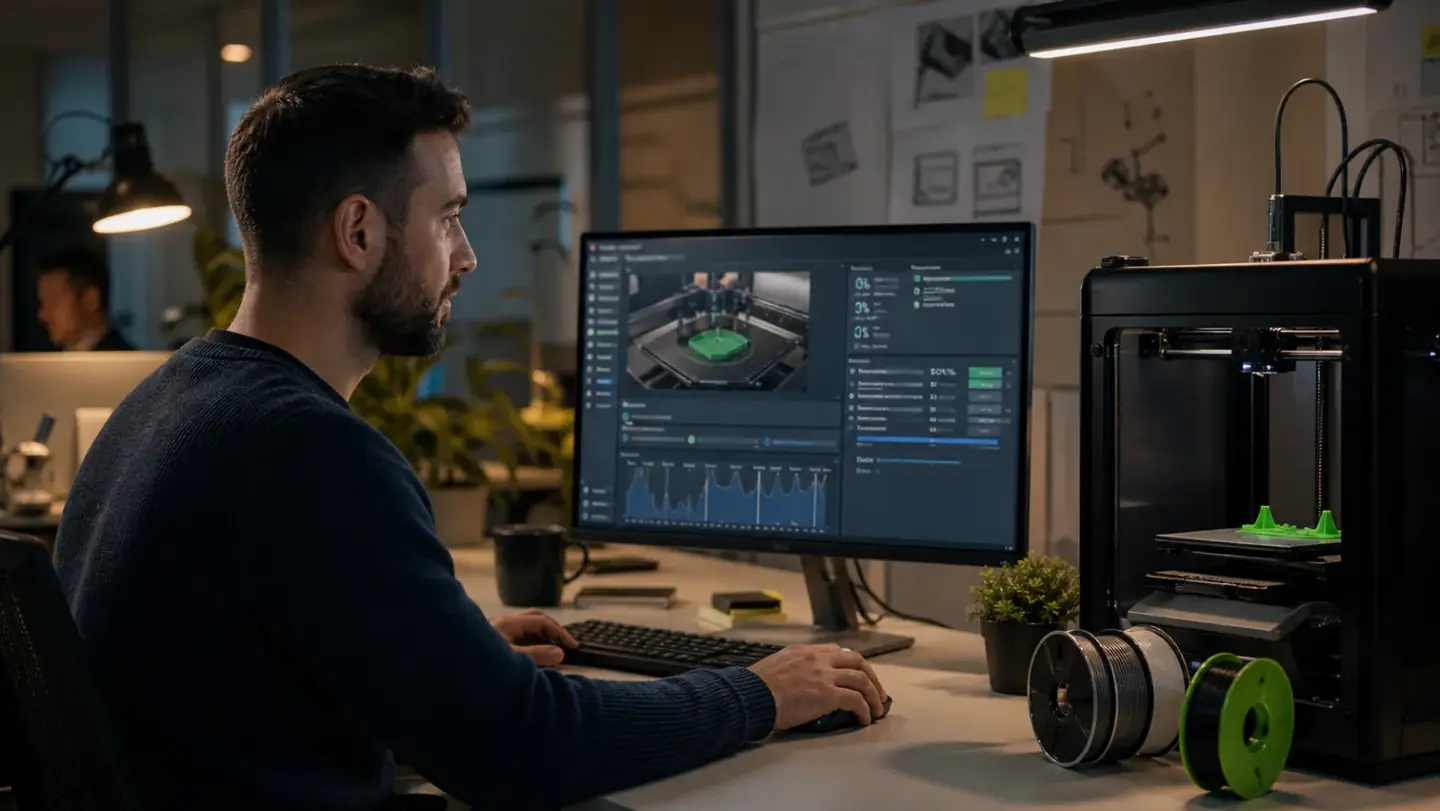
Every support contact is logged in HeroDash with tagged issue categories. Over time, the data shows exactly which questions are coming in most frequently, which product features are generating the most confusion, and which FAQ gaps are causing repeat contacts.
That data goes directly to the brand’s operations team as a weekly report. Not as a generic summary, but as specific, actionable input for improving product listings, updating manuals, and prioritizing the next round of product documentation.
In one German launch, repeated contacts about slicer software compatibility clustered around one specific software version during the first two weeks after the support queue went live. A targeted product FAQ update and a pinned response template for that version reduced related contacts by more than half within two weeks. The fix came from support data, not from a product review or a customer complaint escalation.
Elastic capacity for trade show and promotional peaks
Events like Formnext, the annual Frankfurt 3D printing trade show, drive significant inquiry spikes. So do promotional periods and new product launches. Callnovo’s team structure scales up for these peaks without the brand needing to hire and train temporary staff.
The volume gets absorbed without quality degradation, and the brand’s Amazon response metrics stay intact through the spike.
What changes when the support actually works
The brands that get German 3D printer customer support right do not just see fewer complaints. They see a different kind of customer relationship.
German maker communities are tight and vocal. A buyer who gets a genuinely useful technical answer, from someone who clearly knows the product, in native German, at a reasonable hour, does not just stay a customer. They mention the brand in forums. They answer other buyers’ questions and point to their own positive experience.
In a community where trust is built slowly and skepticism of unfamiliar imported hardware runs high, this kind of organic credibility is worth more than any advertising spend.
Response times that were running 12 hours or longer drop to minutes for evening inquiries. Pre-sale conversion improves because questions that used to go unanswered now get answered before the buyer finds a competitor. Support data surfaces product improvement opportunities that would otherwise stay invisible in the return pile.
None of this is complicated in concept. It is just operationally harder than most brands want to deal with when they are focused on getting the product to market. The brands that treat German-language customer support outsourcing as a market entry requirement, not an afterthought, are the ones building durable positions in a large and still-growing market that rewards whoever shows up and stays competent.
Selling 3D printers or other technical hardware in Germany?
Explore Callnovo’s German-language customer support operations, HeroDash performance platform, or talk to our team about what building this right looks like for your product.