Key Takeaways
- Shopify order lookup should not happen in a separate tab while the customer waits. If the agent needs order context, the support workspace should already have it.
- HeroDash now syncs live Shopify order data into the agent view. Agents can see order number, product details, payment status, fulfillment status, and tracking context beside the conversation.
- Order visibility and order modification are separate capabilities. Viewing order context is the baseline; changing orders requires approved workflows, store permissions, policy rules, and an editable order state.
- The biggest gain is not just speed. Fewer manual lookups also means fewer wrong-order replies, cleaner upsell opportunities, and faster post-purchase changes.
- In XV’s beauty ecommerce deployment, CSAT moved from 82% to 98%. The result came from faster answers, multilingual support, and live order context in one workspace.

A customer messages your support team one hour after placing an order. She wants to change the shade, update the shipping address, or confirm whether the item has already shipped.
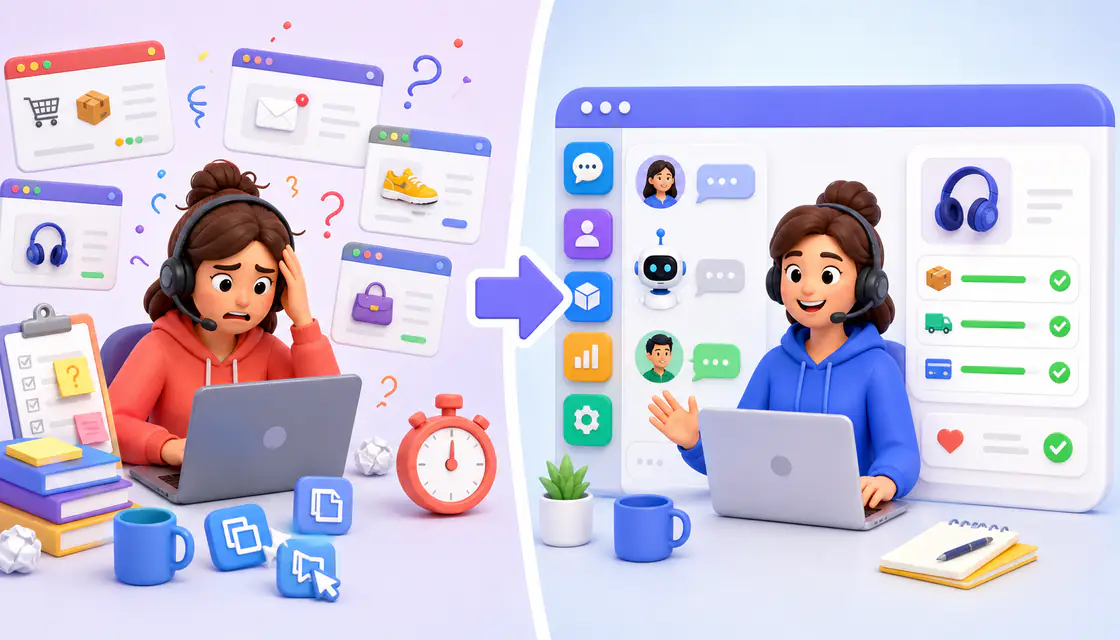
The agent knows how to help. But first comes the familiar routine: copy the order number, open Shopify, search the order, check fulfillment, switch back to the support window, and finally reply.
That small lookup can take 30 to 60 seconds. It does not feel dramatic inside the operation because it happens in tiny slices. But from the customer’s side, the message is simple and the wait feels strange. The typing indicator sits still. Confidence drops quietly.
This is not an agent performance problem. It is a workspace design problem. The order data exists in Shopify. The conversation happens somewhere else. Every second between the customer’s question and the agent’s answer is created by the distance between those systems.
HeroDash closes that distance.
The 3-minute figure refers to the guided store authorization path in a standard connection scenario. It is not a promise that a full production rollout takes three minutes. Production readiness still includes permission review, field mapping, QA checks, agent workflow design, and escalation rules.
What the Integration Actually Does
HeroDash’s Shopify support integration brings live order context into the agent workspace. When a customer starts a conversation, the agent can view relevant Shopify order information in the same screen: order number, product details, quantity, payment status, fulfillment status, shipping status, and tracking context.
The practical change is simple: the agent starts with context instead of searching for it.
For order-related questions, that matters more than it sounds. Many ecommerce contacts are not complex because the answer is hard. They are slow because the answer is trapped in another system. A customer asking “Has this shipped?” or “Can I change color #02 to #03?” should not wait while the agent behaves like a human API connector.
Shopify’s own developer documentation treats orders as a core object containing fulfillment, customer, payment, and line-item information. The operational challenge is not whether the data exists. It is whether the support team can use that data at the moment the customer is asking.
Important boundary: live order context is not the same as unrestricted order editing. By default, HeroDash keeps the order information visible so the agent can answer, triage, and escalate with better context. If the store enables approved update workflows and the order is still editable, the agent can trigger or coordinate the change according to policy. Otherwise, HeroDash keeps the order context visible and routes the request for escalation.
Permissions and Order Data Access
Shopify order data access should be scoped deliberately. Shopify’s Order object documentation references permissions such as read_orders for reading order information and write_orders for writing order changes. It also notes that apps can access the last 60 days of orders by default unless additional access is granted.
That matters for support design. A workspace should not ask for more access than the support workflow needs, and agents should not see more data than they need to resolve the contact.
| Data area | Why support needs it | Boundary to define |
|---|---|---|
| Order identity | Match the conversation to the correct order. | What happens when no match is found? |
| Line items and variants | Answer product, shade, size, bundle, and accessory questions. | Which product details are visible to frontline agents? |
| Payment and fulfillment status | Decide whether a change, cancellation, or shipping answer is possible. | Who can approve actions that affect money or fulfillment? |
| Tracking context | Answer delivery questions without leaving the workspace. | When should a logistics issue escalate? |
| Customer history | Recognize repeat buyers and support-assisted sales opportunities. | What history is visible under least-privilege access rules? |
If an order is outside the accessible window, missing from the store, already fulfilled, or blocked by policy, the right answer is not to guess. The agent should confirm the minimum information needed, explain the status clearly, and route the case to the approved escalation path.
What This Removes from the Queue
The obvious benefit is speed. But the deeper value is that several hidden support costs disappear together.
| Hidden cost | What happens before integration | What changes with HeroDash |
|---|---|---|
| Response time inflation | Every order lookup adds 30 to 60 seconds before the agent can answer. | Order context appears beside the conversation, so the reply can start sooner. |
| Manual transfer errors | Agents copy order numbers, search manually, and risk selecting the wrong record. | The workspace connects the conversation to the relevant order context. |
| Time zone pressure | Offshore or distributed teams lose precious active-window capacity to system switching. | More of the shift is spent resolving contacts instead of navigating tools. |
| Customer confidence loss | A simple request feels slower than it should, especially during pre-sale or post-purchase moments. | The answer feels prepared, specific, and tied to the customer’s actual order. |
This is why integrations matter in support operations. A tool that saves 45 seconds sounds small until the team handles 200 order-related contacts a day. That becomes hours of daily capacity recovered from copy-paste work.
XV’s Beauty Ecommerce Use Case
XV is a beauty brand selling into North America and Europe. The company sells foundations, lip products, eyeshadow, and other products where purchase confidence depends on fast consultation. Customers often ask about shade matching, skin sensitivity, product combinations, and post-purchase color changes.
Before the HeroDash Shopify integration, the support team faced two structural problems.
First, agents spent too much time moving between conversation tools and Shopify order records. This slowed down both pre-sale consultation and post-purchase modification requests.
Second, time zone gaps made delays more expensive. Many customers in North America expected a fast answer during their local shopping window. When a color-change or exchange question waited until the next day, the customer was more likely to give up, receive the wrong item, or start a return.
After XV connected HeroDash with Shopify and Callnovo’s multilingual support team, the operation changed in three ways:
- Agents could answer order-specific questions without leaving the conversation workspace.
- Product consultation became more useful because agents could see purchase history and current order context.
- Post-purchase changes were handled earlier, before a preventable return became the easiest path.
XV Support Results with HeroDash
These results reflect the first reviewed post-deployment support window for one active HeroDash and Callnovo partnership. The exact date range, order volume, and contact sample are withheld at the client’s request, and figures are rounded for confidentiality. They should not be read as a guaranteed outcome for every Shopify seller. Category, ticket mix, policy clarity, training quality, and Shopify data hygiene all affect results.
What Changed in Real Conversations
Consider a pre-sale beauty question:
“Does this highlighter work for sensitive skin?”
Before, the agent could answer from the product guide, but they might not know whether the customer had purchased from the brand before. With live order and customer context visible, the agent can see that the customer has bought twice already, understand what they bought, and recommend a companion brush or safer product combination without turning the interaction into a data hunt.
Now consider a post-purchase request:
“Can I change lip shade #02 to #03?”
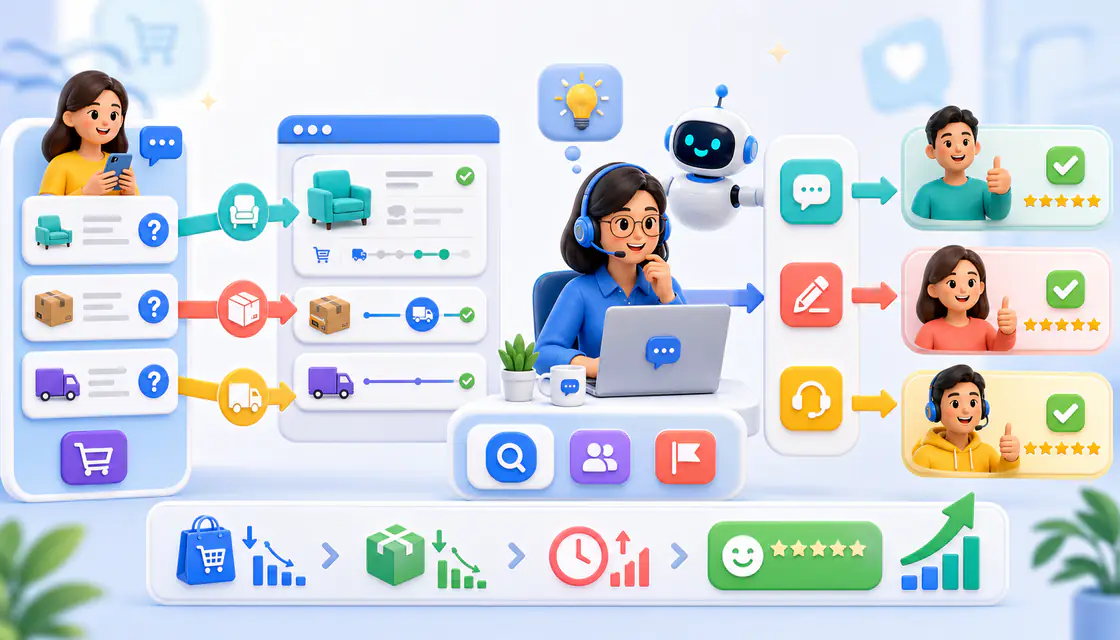
The agent checks the live panel, sees that the order is still unfulfilled, and replies quickly: “Your order has not shipped yet, so I can submit the shade change to #03 through the approved workflow.”
That sentence only applies when XV’s approved update workflow is enabled and the order is still editable. If the workflow is not enabled, or if the order is already past the editable point, the agent keeps the order context visible, explains the next step, and routes the request for escalation rather than promising a change they cannot complete.
That is not just a faster reply. It prevents a wrong-color delivery, a return request, a second support contact, and a customer review that says the brand was slow to help.
Which Shopify Sellers Benefit Most
This is not only for beauty brands. The pattern applies anywhere order context and support quality are tightly connected.
| Seller type | Why live order context matters |
|---|---|
| Beauty and fashion brands | Shade, color, size, bundle, and exchange requests often need fast changes before fulfillment. |
| Consumer electronics sellers | Customers ask about compatibility, accessories, warranty, and delivery timing in the same conversation. |
| Smart home and hardware brands | Agents need purchase history, model details, logistics status, and troubleshooting context together. |
| Outdoor and seasonal products | Peak windows are narrow, and slow answers can turn into cancellations or returns. |
| Cross-border ecommerce teams | Time zone gaps make every avoidable lookup more expensive. |
The integration is especially useful when a store has high daily contact volume. A 45-second lookup gap is annoying once. At scale, it becomes staffing pressure, slower reviews recovery, and lost conversion opportunities.
A Practical Support Workflow
For Shopify sellers, the right workflow is not “show agents more data.” More data can slow agents down if it is not structured.
The better workflow is:
- Identify the customer and order context automatically. Match by order number, email, phone, or customer profile when possible.
- Show only the context needed for support. Order status, fulfillment status, product details, payment state, tracking, and customer history should be visible without burying the agent.
- Route the decision. Simple tracking questions can be answered immediately; fulfillment edits need policy checks; sensitive complaints can escalate.
- Record the outcome. HeroDash should help the team see which contacts were resolved, which required escalation, and which signals point to product, logistics, or policy issues.
That last step matters. Support integration should not only help the current customer. It should also make the operation smarter next week.
For stores that need broader support design, the same model can connect with managed customer support, multilingual support, ecommerce support operations, and outcome-focused AI workflows in HeroDash. For another marketplace support example, see the Colorday case study. The integration is most powerful when the data layer, agent training, and escalation rules are built together.
FAQ
What does the HeroDash Shopify integration do?
It brings Shopify order data into the HeroDash agent workspace so agents can see order status, product details, payment status, fulfillment status, and tracking context while replying to the customer.
Can HeroDash update Shopify orders directly?
HeroDash can show order context by default. If the store enables approved update workflows and the order is still editable, agents can trigger or coordinate changes according to policy. Otherwise, the request is routed for escalation.
Does the integration replace Shopify?
No. Shopify remains the ecommerce system of record. HeroDash gives support agents live order context inside the support workspace so they do not need to switch tabs for routine order questions.
Which Shopify sellers benefit most?
The integration is most useful for sellers with frequent order changes, pre-sale consultation, high daily contact volume, multiple time zones, or products where speed affects conversion and returns.
Are the XV results guaranteed for every store?
No. The CSAT and support-assisted conversion metrics reflect one active HeroDash and Callnovo partnership during the first reviewed post-deployment support window. Results depend on contact volume, product category, policy clarity, team training, and the quality of existing Shopify data.
Client identity withheld at their request. XV is a pseudonym. Performance metrics reflect results from an active HeroDash and Callnovo partnership.
Sources
- Shopify Developers - Order object
- Shopify Developers - Order management apps
- Shopify Developers - API access scopes