Key Takeaways
- The most exposed part of a logistics operation under regulatory scrutiny isn’t the warehouse — it’s customer service. It’s where consumer data is collected, processed, and transmitted at the highest volume.
- Reports point to US lawmakers urging a DOJ investigation into Chinese-affiliated last-mile delivery. In patterns like this, the request is the warning; the enforcement action is what follows.
- Three failures show up in support operations: non-compliant data storage/transmission, agents who weren’t trained on compliance (and left a record of it), and an audit trail that can’t withstand scrutiny.
- A compliant setup rests on three things: data stored where regulations require it, agents certified before they speak to a customer, and a tamper-evident, role-restricted record of every interaction.
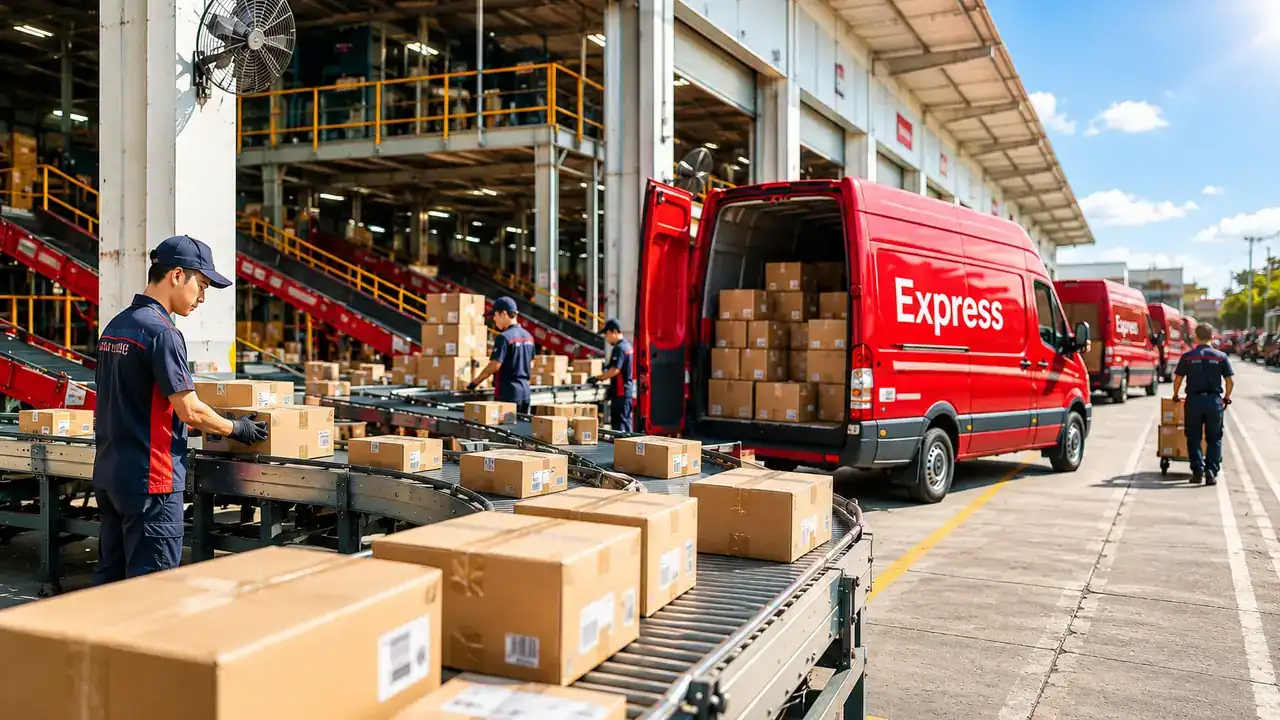
US lawmakers have urged the Department of Justice to investigate Chinese-affiliated last-mile delivery operations in North America. Most companies are looking at their warehouses and customs processes. Here’s the part of the operation that’s actually most exposed.
The investigation request — and what it signals
In May 2026, US Senator Tom Cotton urged the Department of Justice to scrutinize Chinese-controlled last-mile delivery and third-party logistics networks operating in North America — pointing to the data these companies collect and the Chinese government’s potential access to it. It reads as pressure, not yet a ruling — and anyone who has watched regulatory environments develop recognizes the pattern: the request is the warning, not the enforcement action that follows it.
The instinct when regulatory pressure increases is to audit the obvious — warehousing practices, customs documentation, transportation compliance. Those are the right places to look. But there’s a part of the operation that’s equally exposed and gets far less attention: the customer service function.
Customer support is where consumer data is collected, processed, and transmitted. It’s where the paper trail of every customer interaction lives. And under current US data regulations — including Executive Order 14117 — the requirements around sensitive personal data are most likely to surface violations in a company that didn’t build its support infrastructure with compliance in mind.
Three compliance failures that show up in customer service
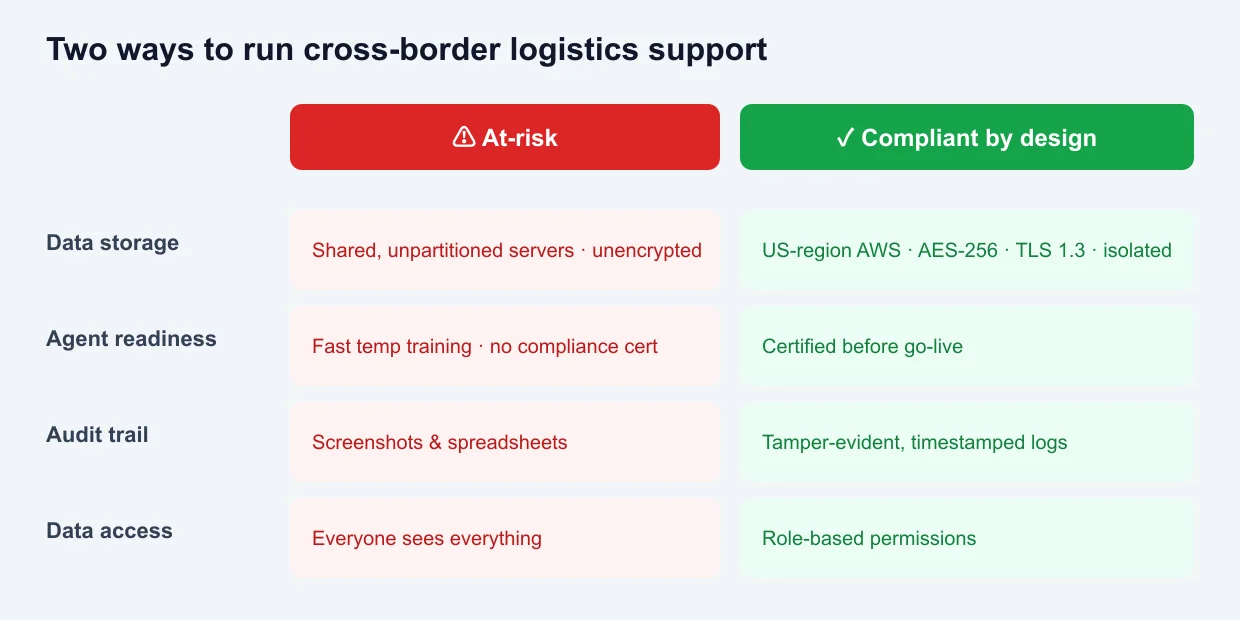
1. Data storage and transmission that doesn’t meet US requirements. EO 14117 requires US sensitive personal data — names, addresses, phone numbers, financial information — to be stored and processed within US jurisdiction, isolated from systems that could transmit it to restricted foreign entities. Many cross-border operations run support on shared servers or unpartitioned cloud environments, with data moving between agents and systems unencrypted. That’s not a theoretical concern — it’s a statutory requirement, and a company that can’t demonstrate compliance when asked isn’t going to have a comfortable regulatory conversation.
2. Agents who weren’t trained on compliance — and left a record of it. During promotional peaks, operations bring in temporary support staff fast. Training covers how to look up shipments and process refunds. What it typically doesn’t cover: which data fields can and can’t be collected, what language constitutes an improper commitment, and the actual limits of the company’s liability in a delay. An agent who volunteers information they shouldn’t, collects unauthorized data, or makes delivery promises the contract doesn’t support creates a documented record an auditor can present as evidence of inadequate internal controls — the company’s compliance posture, captured in writing, for every interaction.
3. No audit trail — or one that can’t hold up. When a regulator requests interaction records for a specific period, many operations produce screenshots from messaging apps, spreadsheet exports, and incomplete email threads. That’s not an audit trail; it’s a collection of fragments an examiner can cast as incomplete or manipulated. A tamper-evident, timestamped, searchable record of every interaction isn’t a luxury here — it’s the difference between demonstrating clean operations and being unable to defend against the accusation that you didn’t maintain them.
What a compliant customer service operation looks like
Callnovo’s approach to logistics support is built around three requirements that have become non-negotiable for operations under scrutiny.
Data stored where the regulations require it
North American customer data is stored entirely within US-based AWS infrastructure — it doesn’t leave US jurisdiction. Transmission uses AES-256 at rest and TLS 1.3+ in transit. European data stays in European infrastructure, and each region’s data is logically isolated. GDPR, CCPA, PDPA, and EO 14117 have different requirements; one undifferentiated infrastructure across all markets satisfies none of them adequately.Agents certified before they speak to a customer
Every agent on a Callnovo logistics account passes a compliance certification before going live — covering the data-privacy law of their markets, the categories of information they’re authorized to collect, and what language is off-limits when describing delivery commitments. Agents who don’t clear the threshold don’t go live. The standard is enforced, not ceremonial.A permission structure that limits exposure by role
HeroDash’s role-based permissions give reps, team leads, quality inspectors, and project managers access to only what their role requires. A front-line agent can’t see account-level data; a quality inspector can’t modify the logs they review. It limits the damage any single compromised account can cause — and produces a clear record of who accessed what, when.Once an agent is live, every interaction is automatically logged in HeroDash in a tamper-evident record — it can be called up, reviewed, and exported, but not altered after the fact. Quality monitoring runs against the logs continuously, flagging sensitive-keyword usage, emotional escalation, and language outside approved parameters — surfacing issues in real time, not in a monthly audit that catches problems weeks later.
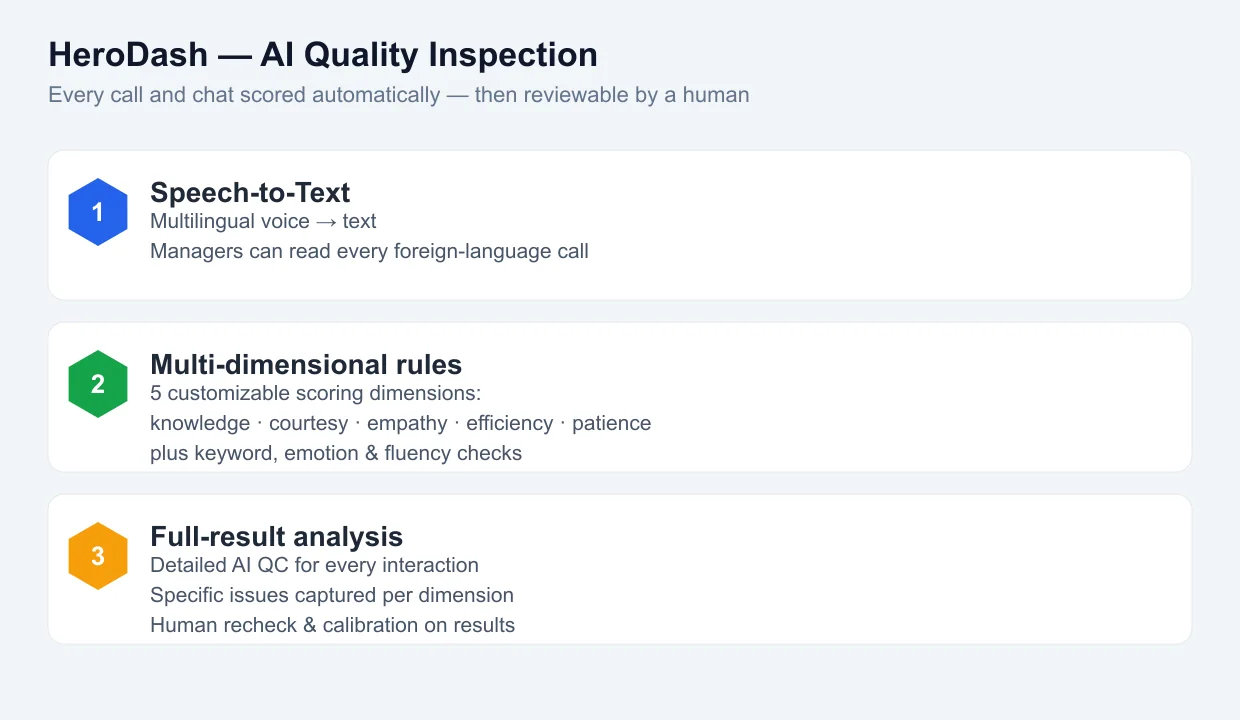
That combination — automated scoring plus human recheck — is what turns “we train our agents” from an assurance into a record. When a regulator asks which employees had access to which customer data during a period, HeroDash produces the answer from its logs, not from memory or reconstructed fragments.

What happened to one operation after deployment
A North American cross-border logistics company deployed Callnovo’s compliance-focused support model and, within 30 days, hit every compliance target: data-access compliance reached ≥99.8%, exception follow-up closure ≥98%, overseas complaint escalation held at ≤2%, and compliance-training completion 100% before go-live — alongside faster response times and a complete audit trail for every interaction in the period.
More importantly, the operation now has what it didn’t before: documented evidence that its customer service function operates within the data-handling requirements regulators are currently scrutinizing. If an inquiry arrives, the records are there — complete, timestamped, and tamper-evident.
The window before enforcement is the window to act
Regulatory pressure on Chinese-affiliated logistics operations in North America is not going to decrease. The reported push for a DOJ inquiry is one signal in a pattern that’s been building for years across data-sovereignty policy, trade enforcement, and scrutiny of Chinese operations in sensitive sectors. And the downside isn’t hypothetical: IBM puts the global average cost of a data breach at nearly $5 million — before any regulator, fine, or suspended operation enters the picture.
The companies best positioned when enforcement arrives are the ones that built compliant operations before they were required to — not the ones that scrambled to retrofit compliance after a fine or a suspension made it unavoidable. Customer service isn’t the most visible part of a logistics operation, but it’s where personal data is handled at the highest volume, where internal controls are most legible to an outside examiner, and where the gap between a company that took compliance seriously and one that didn’t shows up fastest.
The same discipline runs across our operations — from a logistics call center in Latin America to how we secure 2,500+ endpoints.
FAQ
Does US data law affect customer service for cross-border logistics?
Yes. Executive Order 14117 governs how US sensitive personal data — names, addresses, phone numbers, financial information — is stored, processed, and transmitted, with requirements to isolate it from systems that could send it to restricted foreign entities. Customer service is where that data is collected and handled at the highest volume, so it’s one of the most exposed functions in a cross-border logistics operation, not one of the least.
Where must US customer data be stored under EO 14117?
Within US jurisdiction, appropriately isolated from systems that could transmit it to countries of concern. In practice that means US-based infrastructure, encryption in transit and at rest, and logical separation of each region’s data. Callnovo stores North American customer data entirely within US-based AWS infrastructure, using AES-256 at rest and TLS 1.3+ in transit, with European data kept in European infrastructure.
What makes a customer-interaction audit trail defensible?
It has to be tamper-evident, timestamped, complete, and searchable — a record that can be called up and exported but not altered after the fact. Screenshots from messaging apps, spreadsheet exports, and incomplete email threads are not an audit trail; a skilled examiner can characterize them as incomplete or manipulated. Every interaction on HeroDash is logged in a tamper-evident record from the moment it happens.
How do you keep support agents from creating compliance exposure?
Two mechanisms. First, every agent passes a compliance certification — covering data-privacy law, which data fields they may collect, and what they can’t promise about delivery — before going live; agents who don’t pass don’t go live. Second, role-based permissions limit each role to only the data it needs, and continuous quality monitoring flags sensitive keywords, escalation, and off-parameter language in real time.
About Callnovo
Callnovo is a global multilingual customer support partner operating 35+ localized service centers, delivering support for ecommerce, logistics, and B2B brands across 65+ languages on the HeroDash platform. For operations under regulatory scrutiny, Callnovo builds customer service that is compliant by design — data stored in-region, agents certified before go-live, and a tamper-evident, role-restricted record of every interaction.
Running cross-border logistics operations in North America or Europe and thinking through customer service compliance? Explore Callnovo’s logistics & managed support teams and the HeroDash compliance and audit platform — or talk to our team about what a compliant customer service setup looks like for your operation.
Sources
- US Senate — Sen. Tom Cotton urges DOJ to investigate Chinese-controlled delivery networks (May 2026)
- FreightWaves — Sen. Cotton urges DOJ investigation of China-backed parcel carriers
- US DOJ — National Security Division, Data Security Program (EO 14117)
- Federal Register — Executive Order 14117
- IBM — Cost of a Data Breach Report
Client details used with permission. Performance metrics reflect results from an active Callnovo partnership.