Key Takeaways
- Mother’s Day is a support stress test for beauty device sellers, not only a sales campaign.
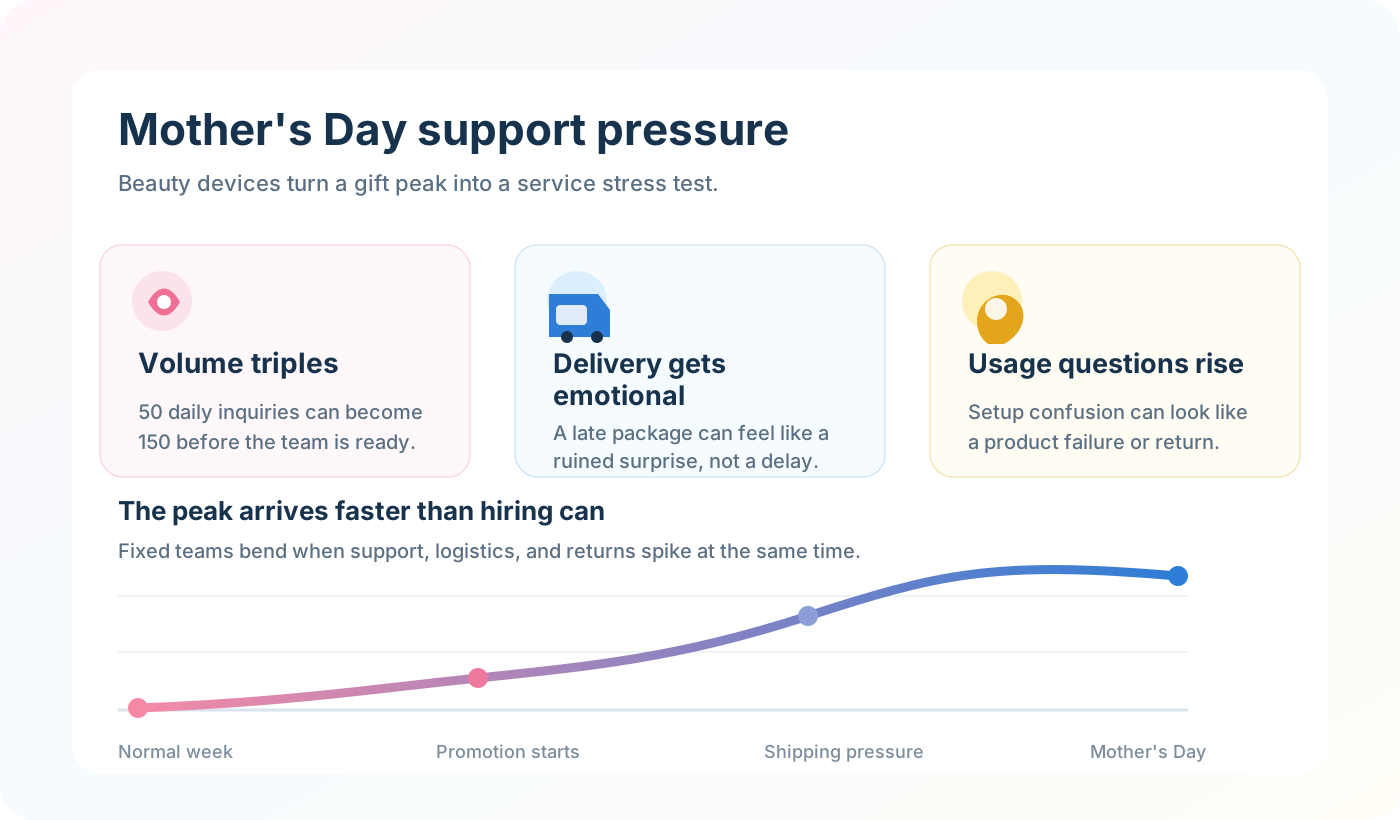
- Fixed two- or three-person teams often cannot absorb a sudden jump from 50 inquiries a day to 150.
- Proactive delivery updates and usage guidance reduce emotional complaints before they become returns.
- When every contact is tagged in HeroDash, the Mother’s Day peak becomes a planning asset for Prime Day, Black Friday, and Christmas.

Every Mother’s Day, beauty device brands face the same problem.
Inquiry volume suddenly triples. Delivery complaints become emotional. Small support teams get overwhelmed within days.
For LED masks, microcurrent devices, facial cleansing tools, and other beauty tech products, Mother’s Day is not just a sales peak. It is a customer support stress test.
In 2026, the National Retail Federation expected U.S. Mother’s Day spending to reach $38 billion, with shoppers budgeting an average of $284.25 per person. For ecommerce brands selling premium giftable devices, that spending creates opportunity. It also creates a short, intense support window where speed, tone, delivery visibility, and product guidance all matter at once.
Privacy note: Client identity has been withheld at the client’s request. Performance metrics referenced in this article reflect results from an active Callnovo partnership.
What Actually Happens To Beauty Device Sellers In May
Mother’s Day compresses several support patterns into one short period.
Pre-sale shoppers want to know whether a device is safe for a skin type, whether it works with an existing skincare routine, when it will arrive, and whether the recipient will understand how to use it. Post-purchase buyers want delivery assurance. Gift recipients need setup help. A smaller group starts a return because the device feels confusing, late, or not immediately effective.
Those are not separate problems for a small support team. They arrive together.
The brands that handle this season well do not simply add a few generic agents after the queue is already on fire. They prepare an elastic support operation before the spike arrives, then use the data from that spike to improve the next one.
Problem One: The Team Cannot Absorb The Volume
A two- or three-person customer service team may handle 50 inquiries a day without difficulty. When that number triples, the same team hits a wall.
Response time stretches from 20 minutes to two hours or more. Buyers who are in the middle of a purchase decision do not wait two hours. They close the tab and find a competitor who responds faster.
The obvious fix is to hire more people. The problem is timing.
Hiring local English-speaking customer service staff in North America can cost $25 to $35 per hour, and new agents often need at least three weeks of training before they are useful on a product category like beauty tech. By the time a new hire is productive, Mother’s Day is over.
The brands that solve this problem do not hire for peaks. They build elastic capacity: support infrastructure that can scale up in days, not weeks, without sacrificing product knowledge or communication quality.
Problem Two: Logistics Complaints And Return Requests Arrive Together
Mother’s Day buyers are exceptionally sensitive to delivery timing. An order that arrives two days late is not only inconvenient. It can feel like a ruined surprise.
When customs delays, address errors, or carrier failures affect orders that were supposed to be gifts, the resulting complaints carry more emotion than ordinary ecommerce complaints. The buyer is not only asking where the package is. They are asking whether the brand has just damaged a personal moment.
At the same time, beauty devices generate a specific category of post-purchase need: usage guidance.
A device the buyer does not know how to use correctly feels like it is not working. A customer who uses a microcurrent device incorrectly and does not see results within the first week may start a return request even when the product is functioning exactly as designed.
Without a structured process for proactive delivery updates and post-purchase usage support, return rates climb and review scores drop during the highest-visibility window of the year.
For ecommerce support teams, this is where apology language and operations have to work together. A better sentence alone will not fix a late package, but an agent trained in service recovery language can keep the conversation from escalating while the operational fix is happening.
Problem Three: After The Peak, No One Can Make Sense Of What Happened
When Mother’s Day ends, most sellers are left with hundreds of scattered records: spreadsheet exports, messaging app screenshots, email threads across multiple platforms, and marketplace messages that are hard to compare.
There is no clear picture of what actually drove the support volume.
Which inquiry types took the longest to resolve? Which return reasons appeared repeatedly? Which time slots had the worst response rates? Which pre-sale questions should be turned into listing content before the next campaign?
Without answers to those questions, the same problems repeat at Prime Day, Black Friday, Cyber Monday, and Christmas. Support pressure gets heavier each cycle, but the learnings never compound because there is no system to capture them.
How The Right Support Operation Handles All Three
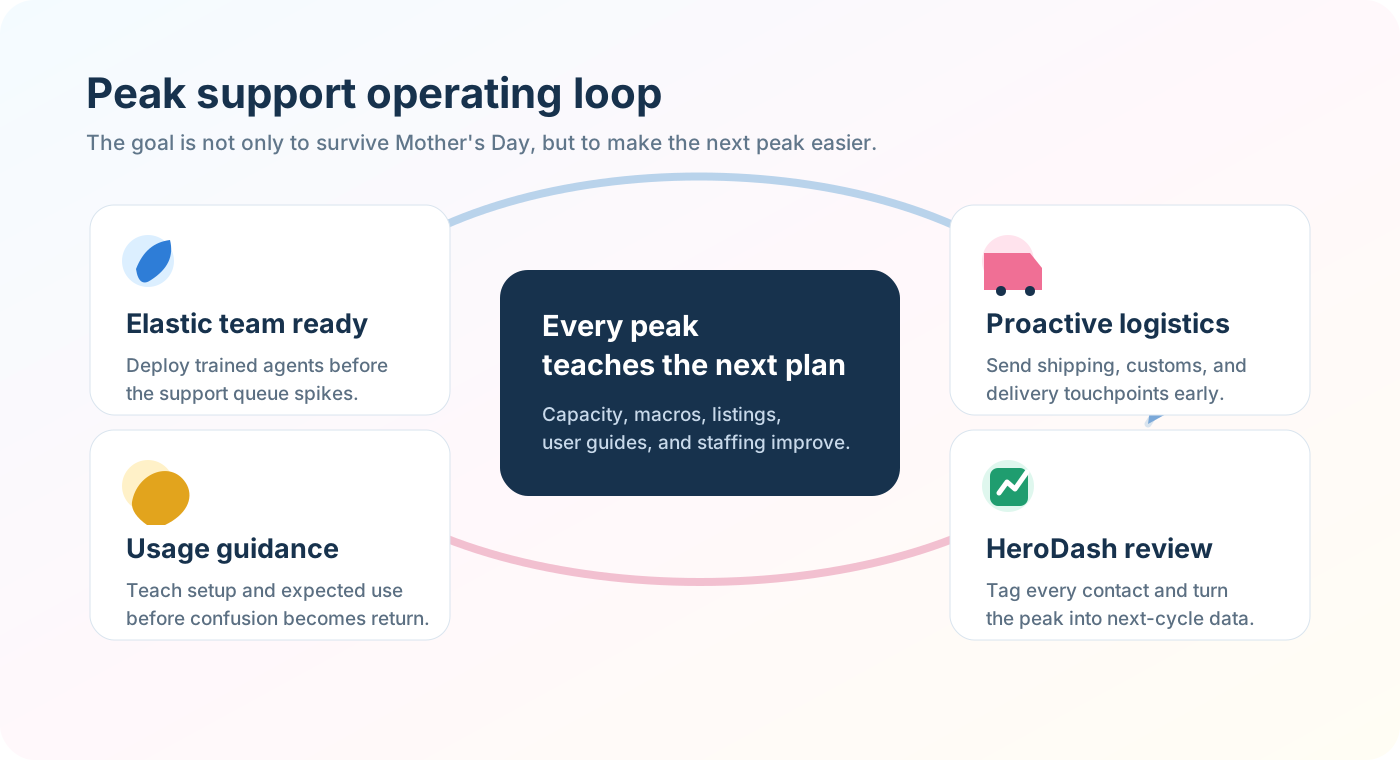
The right seasonal support model solves the volume problem, the communication problem, and the learning problem at the same time.
Elastic team deployment before the spike hits
Callnovo helps ecommerce brands scale multilingual customer support during high-volume seasons by deploying trained support teams before peak periods begin.
For beauty device sellers preparing for Mother’s Day, that often means having additional English-language support capacity ready two weeks before traffic spikes.
Those agents are not dropped into the queue with generic scripts. They go through product-specific training on the device category, including technical parameters, usage guidance, safety boundaries, return policies, and the specific questions beauty tech buyers consistently ask.
The result is that when inquiry volume triples, response time does not degrade in the same way. The capacity is already there. And because the team is trained on the product rather than only on customer service language, interaction quality holds under pressure.
Proactive logistics touchpoints that prevent complaints before they happen
For Mother’s Day orders, a structured three-contact proactive outreach approach can make a meaningful difference in complaint volume.
Shipping confirmation
Send the buyer a shipping message with the estimated delivery date, carrier context, and the next expected milestone.
Customs or carrier update
If the order crosses borders or moves through a known delay point, tell the buyer what changed before they have to ask.
Final delivery reminder
Before final delivery, prompt the buyer or recipient to watch for the package and confirm the address details if needed.
Usage guidance follow-up
After delivery, send setup help, safety reminders, and first-week expectations so confusion does not turn into an avoidable return.
Most delivery complaints are not only about the problem itself. They are about silence.
A buyer who knows their order is delayed and understands why is in a different emotional state than a buyer who ordered two weeks ago and has heard nothing. Proactive communication converts potential complainants into buyers who feel taken care of.
For returns and exchanges, agents follow brand-specific policies while using structured empathy-first language that guides buyers through the process without triggering emotional escalation. The goal is not to block legitimate returns. It is to prevent returns that happen because the buyer felt ignored, confused, or dismissed.
Full-cycle data that makes every peak smarter than the last
Every contact handled through HeroDash is logged, tagged by inquiry type, and tracked through resolution.
After Mother’s Day, the brand receives a structured review covering which inquiry categories generated the most volume, which touchpoints had the longest resolution times, which return reasons appeared repeatedly, and which staffing patterns produced the best response metrics.
This data has a direct use. It tells the brand exactly what to fix before the next peak.
If a significant portion of post-purchase contacts were about how to use the device correctly, that is a signal to improve the user guide or add a setup video. If returns clustered around a specific product claim, that is a signal for the listing team. If certain time slots consistently had worse response times, that is a staffing optimization for next time.
The brands that use this feedback loop come into each successive peak better prepared than the last. The ones that do not use it repeat the same mistakes every season.
What Changes When This Is Done Right
A North American beauty device seller deployed Callnovo’s elastic support model for a Mother’s Day season and saw measurable improvement across core support metrics within 30 days: faster response times, lower return rates, and improved review scores during and after the peak period.
More importantly, the brand came out of the season with a data set that directly shaped how it prepared for Prime Day.
Recurring inquiry types from Mother’s Day informed an FAQ update. Return reason analysis led to a product listing revision. Staffing patterns from the peak weeks were used to build a more accurate capacity model for the next high-volume event.
The support operation stopped being something that happened to the team during peaks. It became something the team could plan around.
Mother’s Day Is The First Peak Of The Year, Not The Last
Prime Day. Back to school. Black Friday. Cyber Monday. Christmas.
The calendar for North American ecommerce does not get easier after Mother’s Day. It gets more demanding.
Each event creates the same pressure that Mother’s Day does: volume spikes a fixed-size team cannot absorb, emotionally charged buyers with high expectations, and post-peak complaint backlogs that are expensive to work through.
The brands that build elastic, data-driven support infrastructure for Mother’s Day do not just survive that one window better. They build the operational foundation that makes every subsequent peak manageable.
What most sellers treat as a crisis becomes something they can plan for, staff correctly, and learn from.
The question worth asking before the next peak is already here: is your customer support operation built for the day volume triples, or only for the days it does not?
Frequently Asked Questions
Why does Mother’s Day create support spikes for beauty device brands?
Mother’s Day creates a support spike because buyers are purchasing gifts with a fixed emotional deadline. Beauty device brands often see pre-sale questions, delivery complaints, setup questions, and return requests arrive in the same short window.
How early should a beauty device brand add seasonal support capacity?
For Mother’s Day, support capacity should usually be ready about two weeks before the peak so agents can finish product-specific training, learn delivery policies, and start absorbing pre-sale questions before volume triples.
What logistics messages reduce Mother’s Day complaints?
The most useful logistics messages are a shipping confirmation with an estimated delivery date, a customs or carrier milestone update when relevant, and a final delivery reminder that tells the buyer or recipient when to watch for the package.
How can beauty device brands reduce returns after a gift peak?
Brands can reduce avoidable returns by offering clear setup guidance, quick troubleshooting, and empathy-first return handling. Many beauty device returns begin as usage confusion rather than true product failure.
How does HeroDash help after a seasonal support spike?
HeroDash logs and tags support contacts by inquiry type, resolution path, timing, and return reason so brands can identify what caused the spike and improve staffing, FAQs, product listings, and user guides before the next peak.
Preparing For A Seasonal Peak?
Preparing for a seasonal peak and thinking through your support capacity? Explore Callnovo’s elastic team deployment model and HeroDash operations platform, then talk to our team about building a support operation that holds up when volume spikes.
Client identity withheld at their request. Performance metrics reflect results from an active Callnovo partnership.